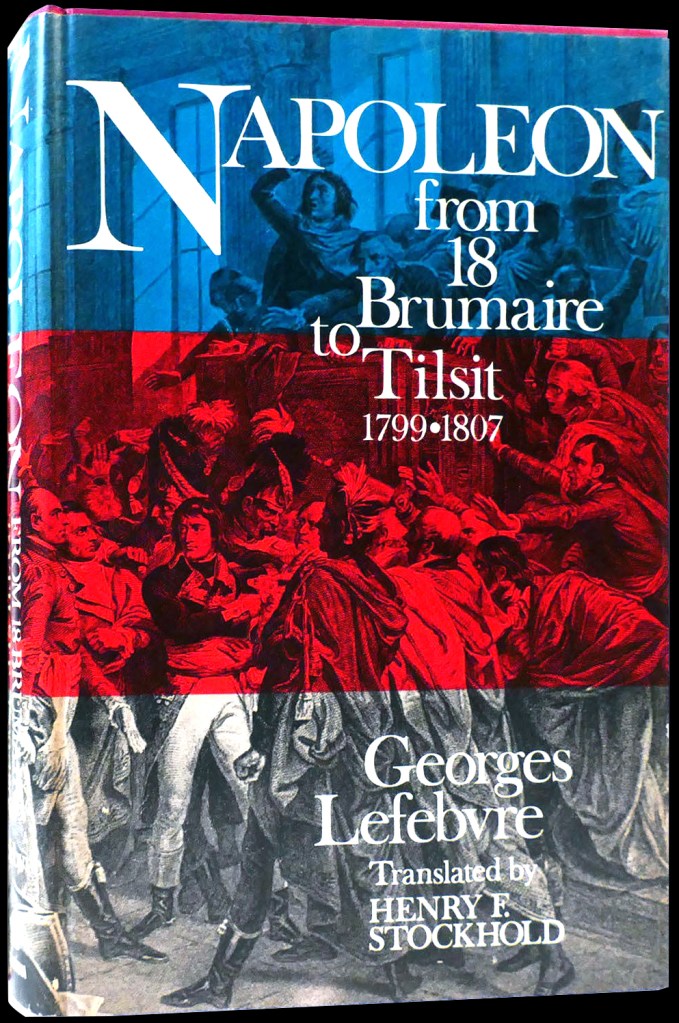
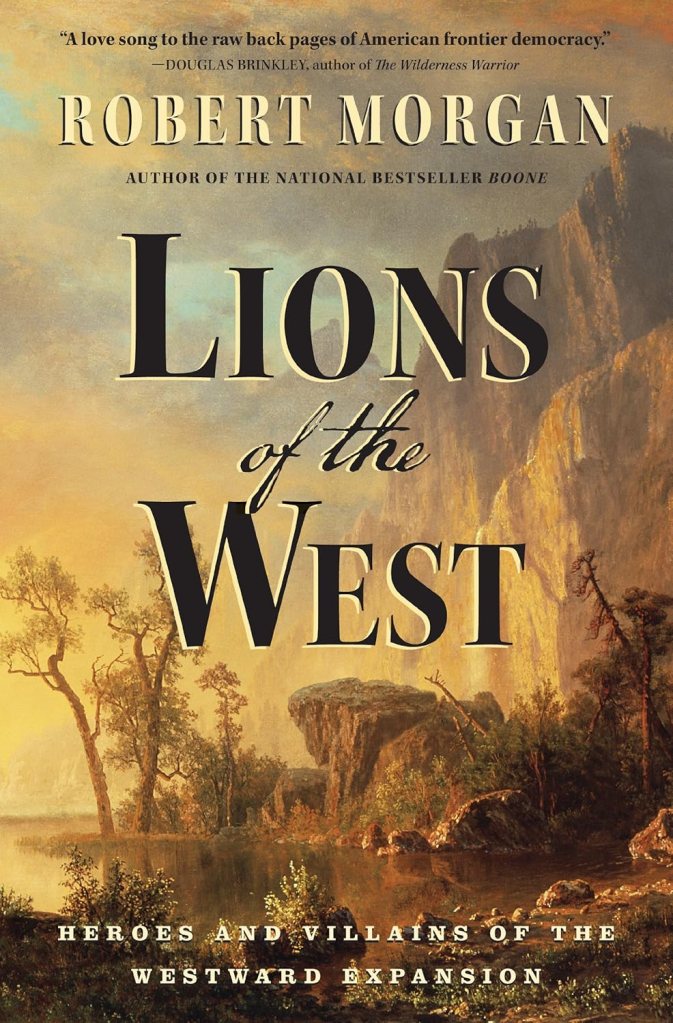
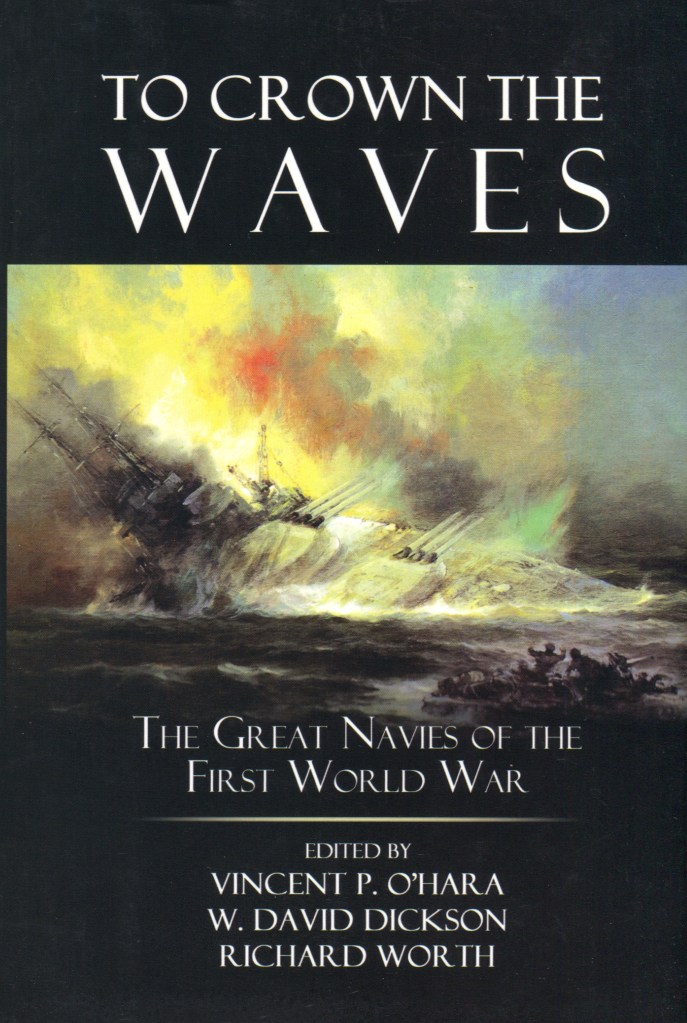
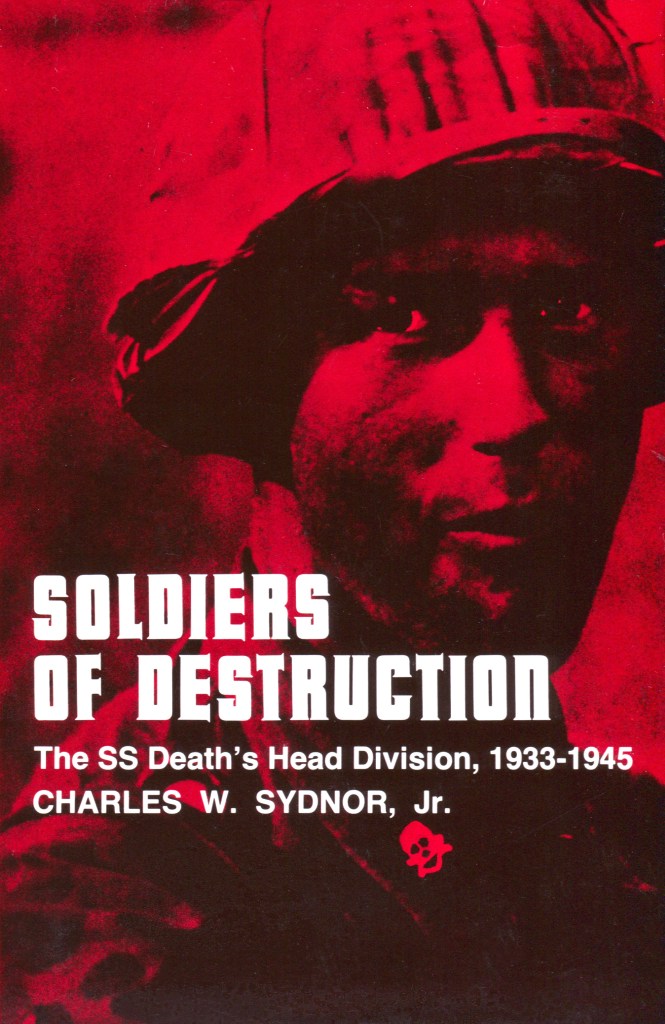
To Crown The Waves and Soldiers of Destruction are books that are not common at thrifts, so I was fortunate to get them. The Napoleon book was under a dollar, and the Lions of the West is a great topic, the heroes and villains of westward expansion.
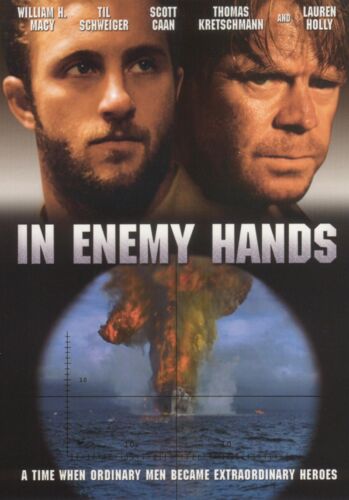
The DVD In Enemy Hands is a submariner war movie I’ve never even heard of, it is amazing that I even pulled it off the shelf as the name is so generic.
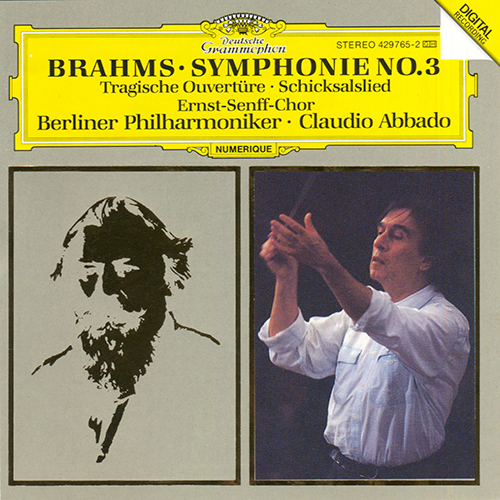
The BrahmsSymphony by Claudio Abbado is the the second I have by this conductor. It is difficult to pick this kind of title out of all the common ones that look just like it.
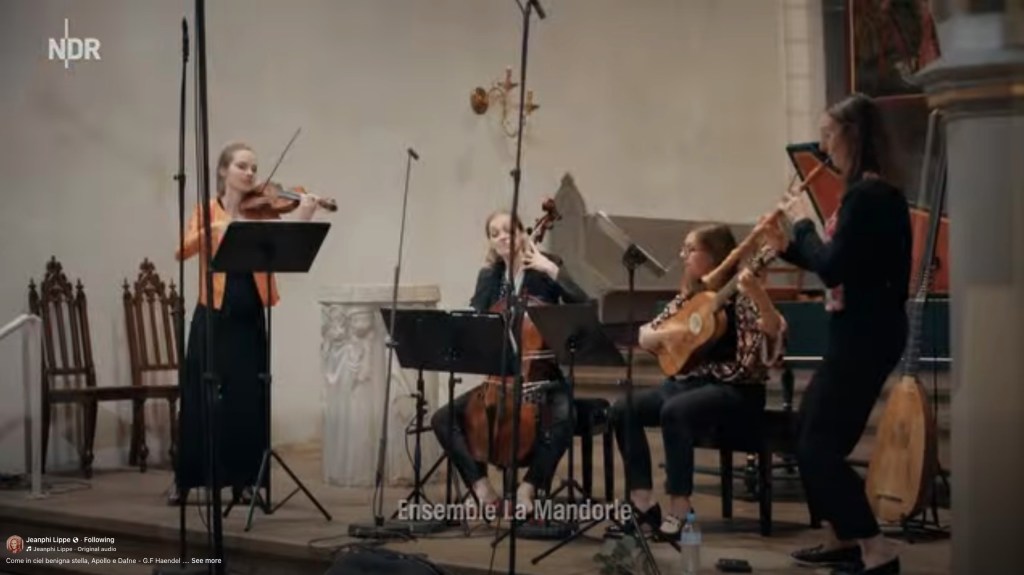
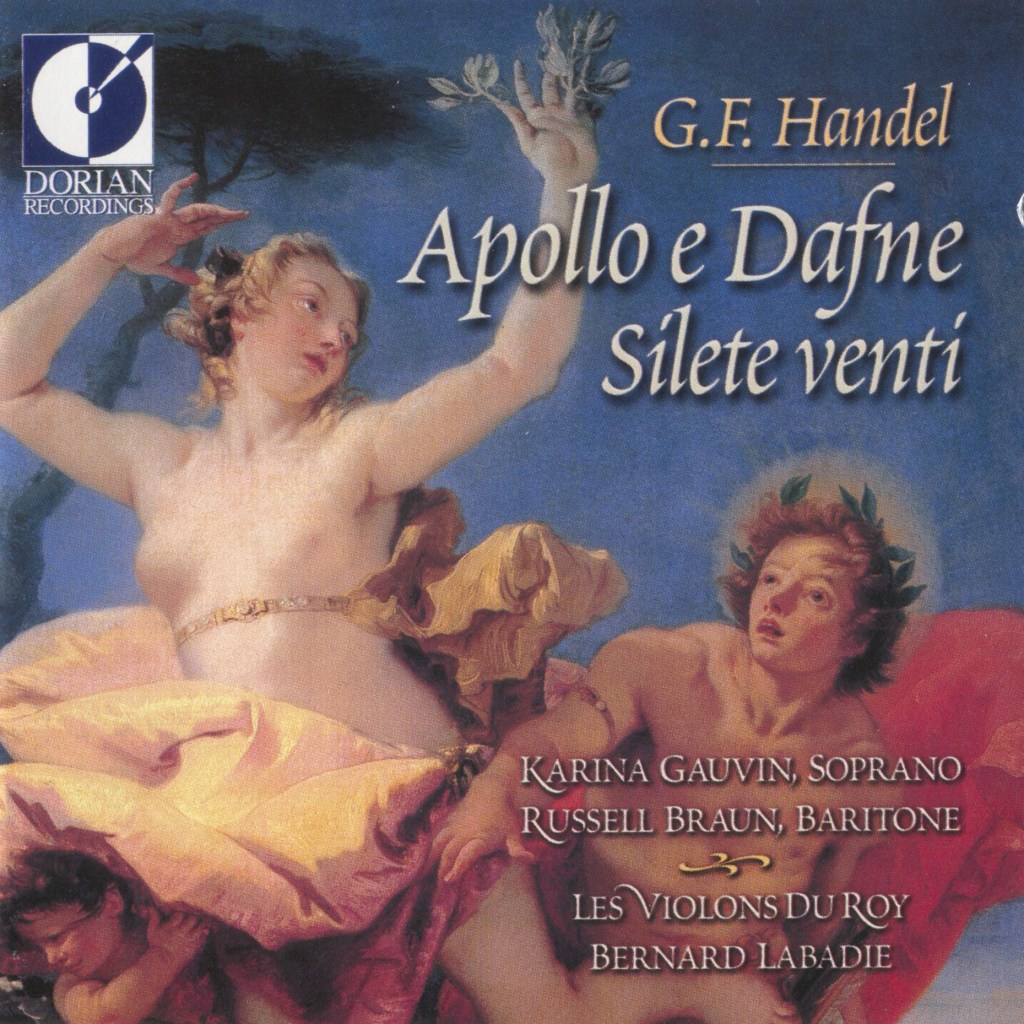
Classical music has a seemingly infinite volume of pieces to discover; I ran across this video on Facebook today and as it turns out, I have an album with the entire composition that was buried in my large library (although it is digitally in my iTunes/Music, ripped from the cd and ready to go). This video brought it out to the front, a wonderful piece to hear.
It is one of those many albums I bought years ago in volume at the thrift store, library sale, or something like that and never really listened to. That is the beauty of a library, there are treasures within just waiting to be discovered.
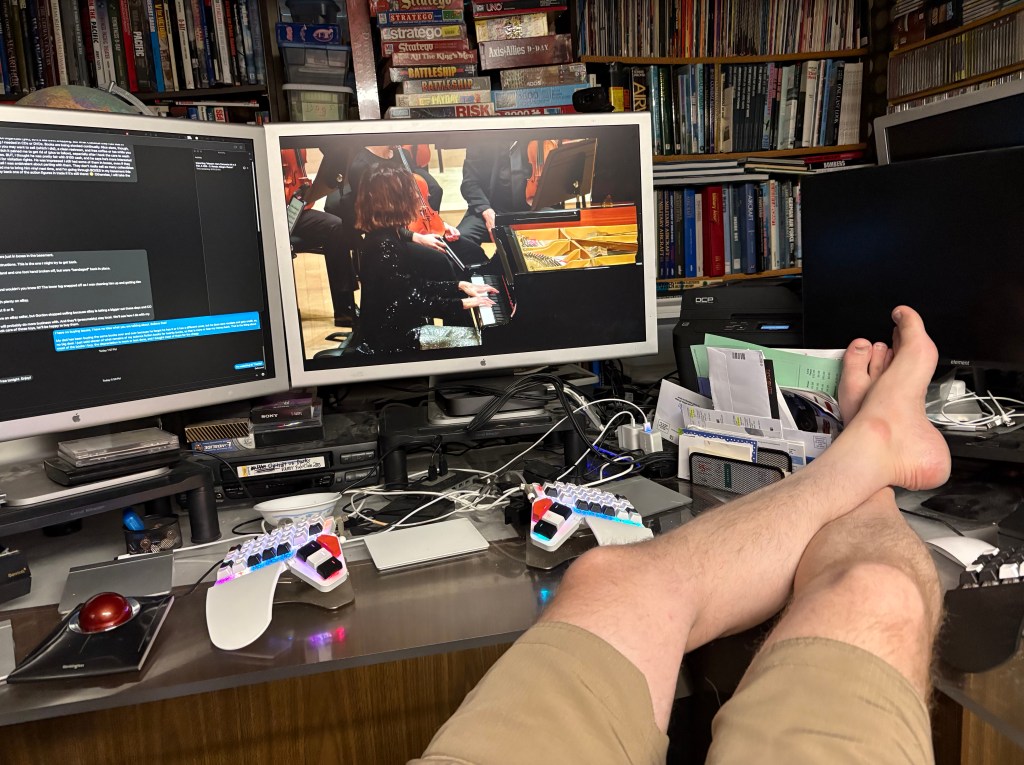
Watching Hélène Grimaud play Gershwin live. We really take for granted that this is even a thing. It wasn’t that long ago that just watching any video on a computer in a tiny window was an event, and now this full-screen concert effortlessly plays, no big deal.
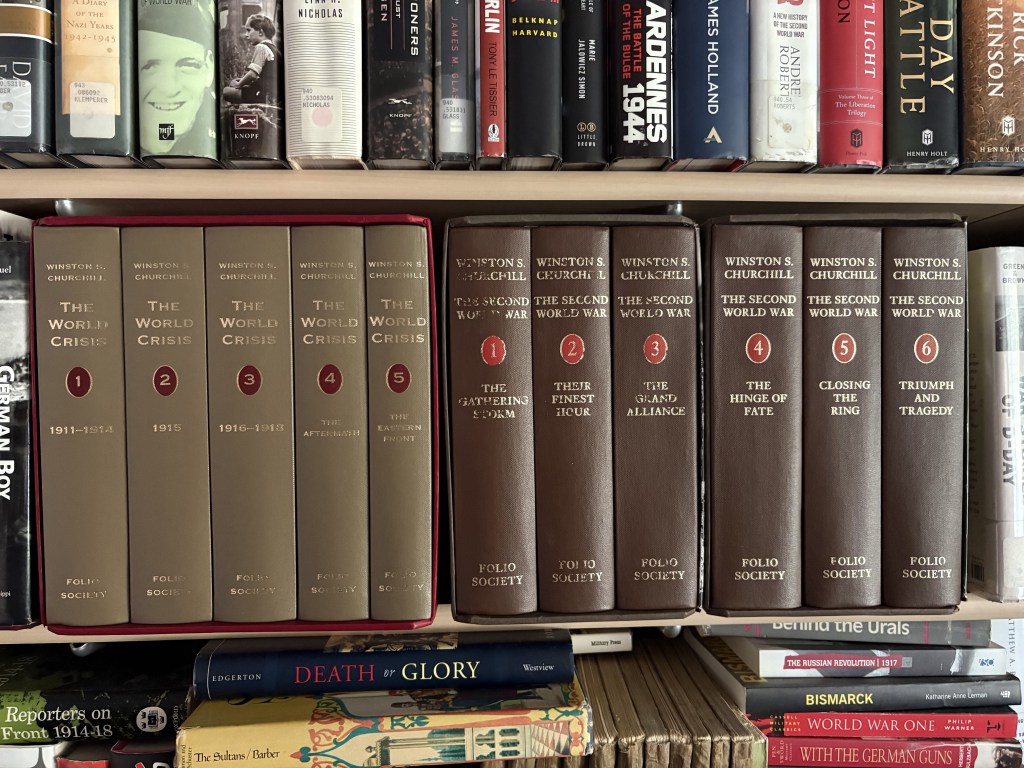
I’ve come across many books by Winston Churchill, who wrote a lot of volumes, but up to now I haven’t purchased many of them. Considering his involvement in both World Wars, I should have been reading his works long ago.
These aren’t the super-expensive, leather-bound Easton Press reprints (that I would prefer), but rather are the Folio Society versions that are still of a higher quality than the average new book. I’m very glad to have these, although at some point I’d like to get the leather-bound Easton Press versions.
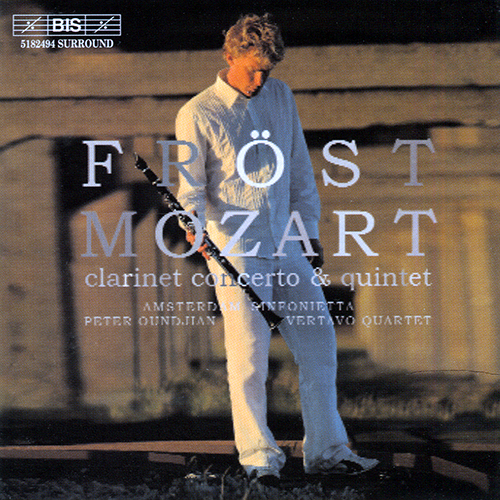
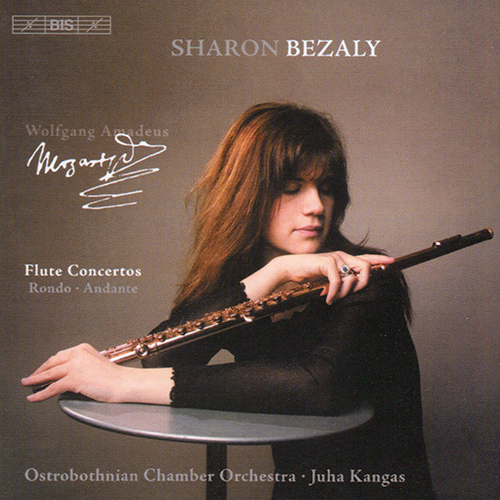
Picked these up today, a dollar apiece. What a deal! I actually picked them out on Tuesday, but they weren’t half-off, but they were exactly where I left them, and today were now half-off. The two Mozart CDs by BIZ sound great. It is difficult for me to find classical I don’t have already at a thrift store, but it can still happen.
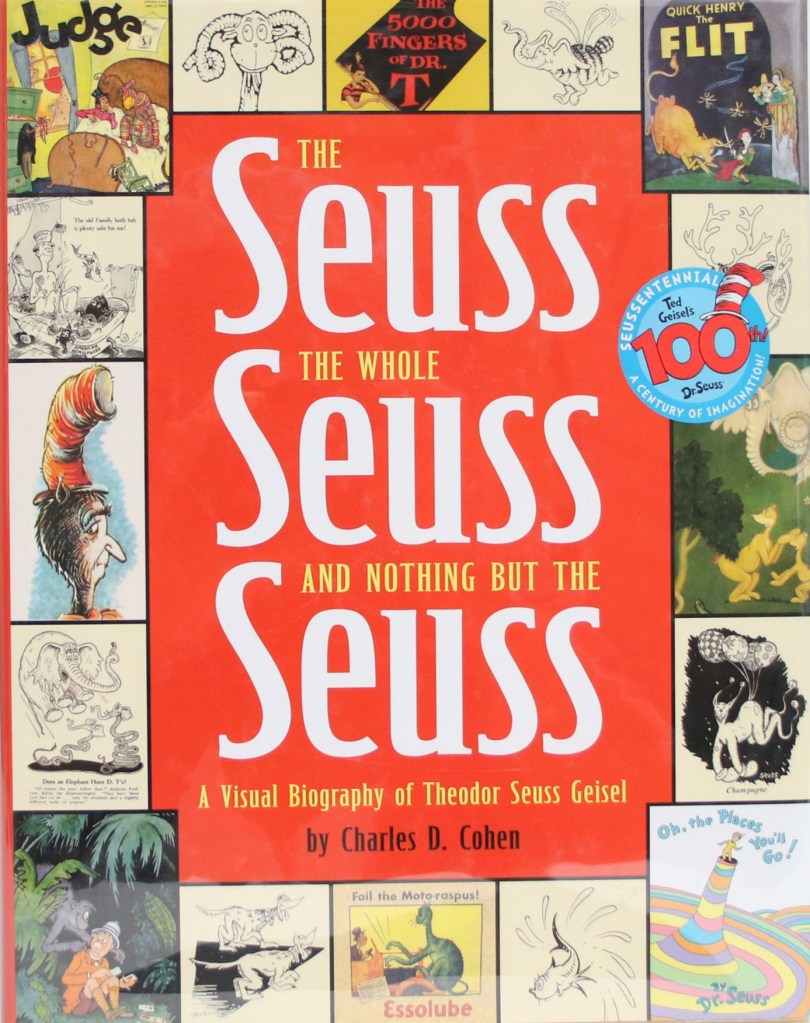
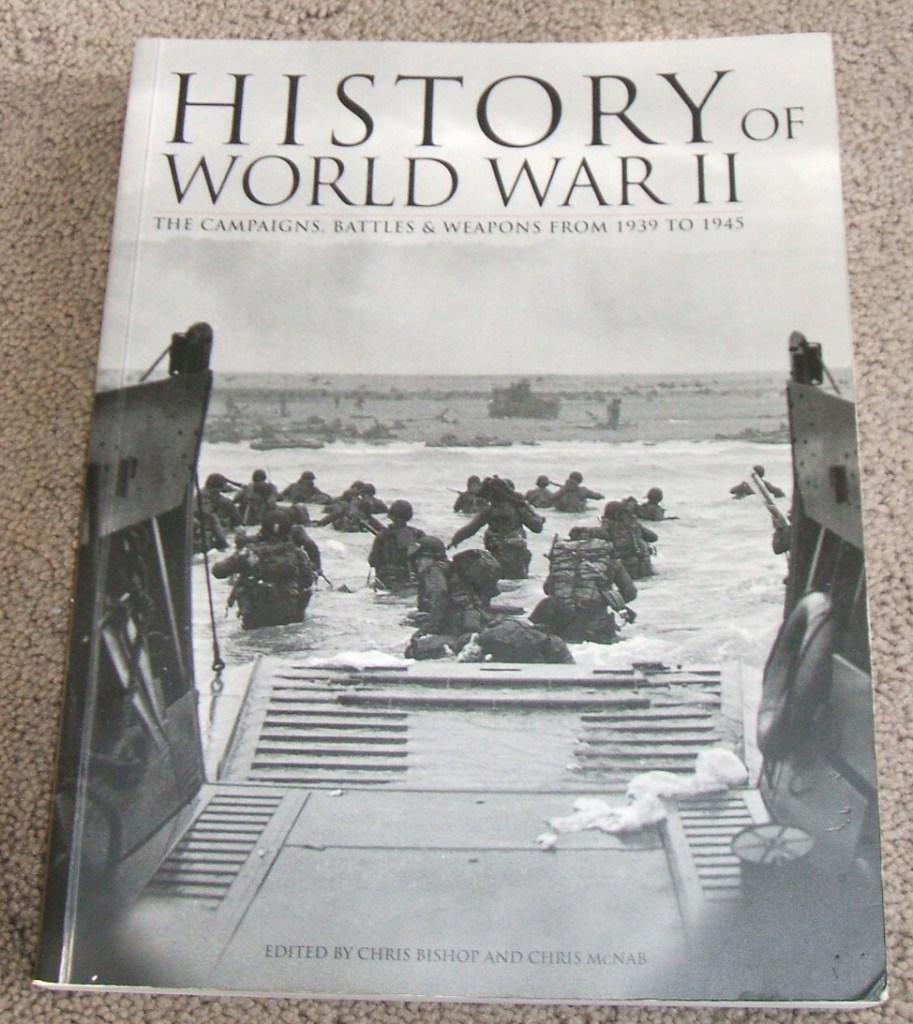
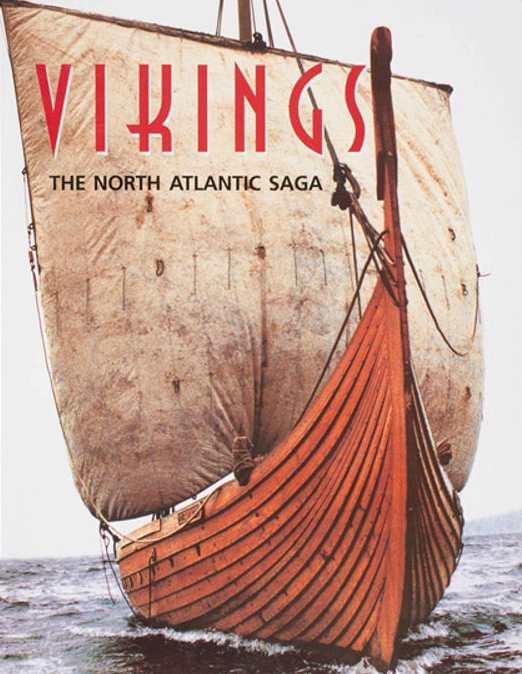
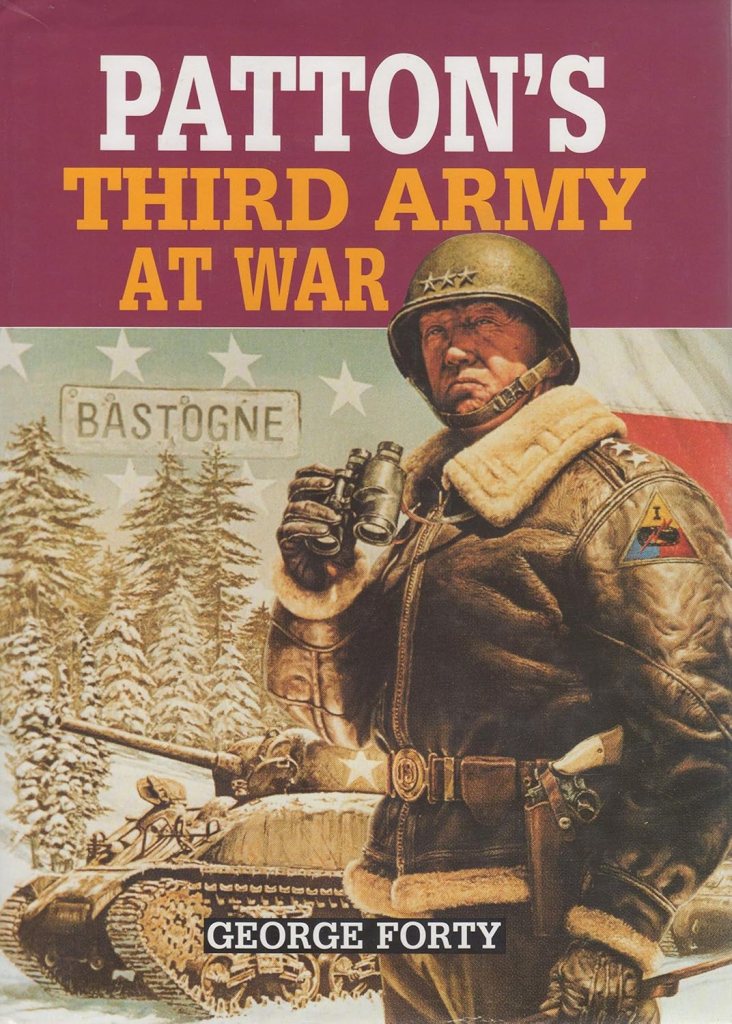
The Dr. Seuss book is substantial and is very detailed into his life and work. The World War II book appeared pretty standard, but the illustrations are terrific. Vikings and the Patton book are great additions to the library as well.
Les Arts Florissants : Rameau – Les Sauvages ( extrait des Indes Galantes ) Elodie Fonnard Dodeman Justin Bonnet Juliette Perret Jérémie Delvert Virginie Thomas soprano Christophe Gautier Les Arts Florissants, chœur et orchestre William Christie et Paul Agnew, direction musicale
It seems these days, that most people don’t have the concept of a library; they just see someone who has “too many books”. I have been asked on more than one occasion: “You’re never going to be able to read that many books!” While it would be nice to have the ability to read all of my books, (I actually know a guy who can do this, but alas, I am a slow reader) one of the many benefits of having an actual library is the ability to wander and select something I hadn’t thought about in a long time. I’m a custodian of this custom library, full of volumes that people have put an immense amount of work into creating. It definitely isn’t just a “collection” of books.
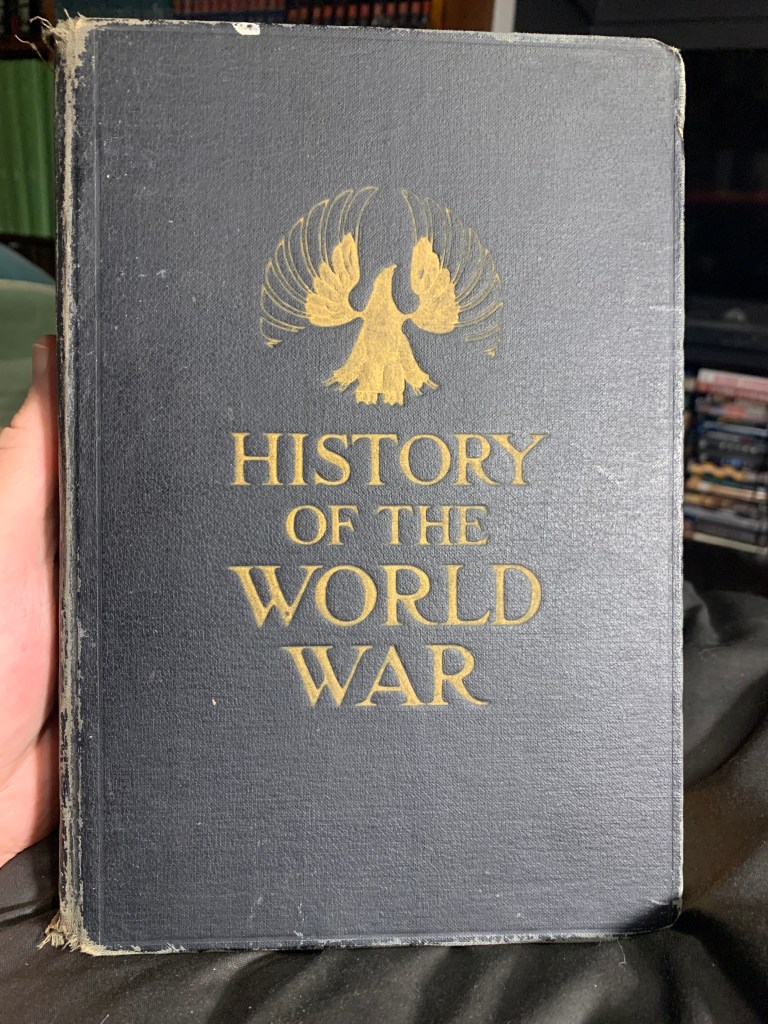
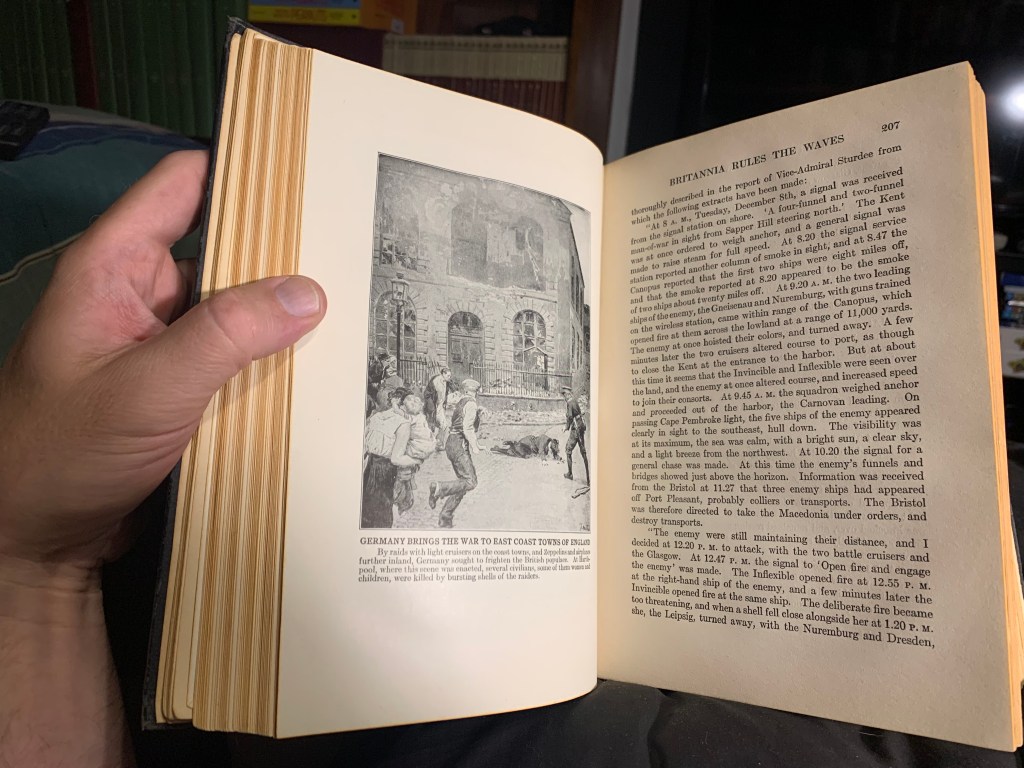
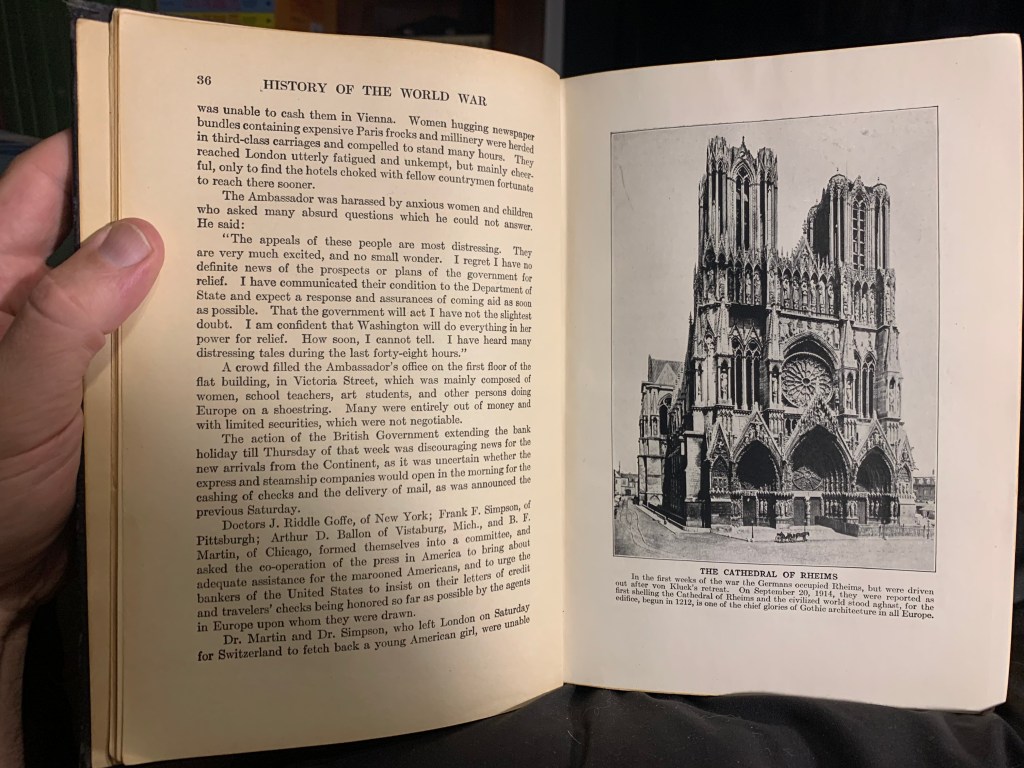
A few weeks ago, I found two small, old volumes at the thrift store, and they were part of a set of five. Upon checking “The Registry”, also known as my spreadsheet, it turned out that I had the compilation of all five, a complete and singular volume in my library already. I had a tough time finding it though, because all of my World War I books are supposed to be in the same place, but I had to search and discover this was mistakenly among my older World War II books. But, it couldn’t hide, as The Registry doesn’t lie, it had to be here somewhere!
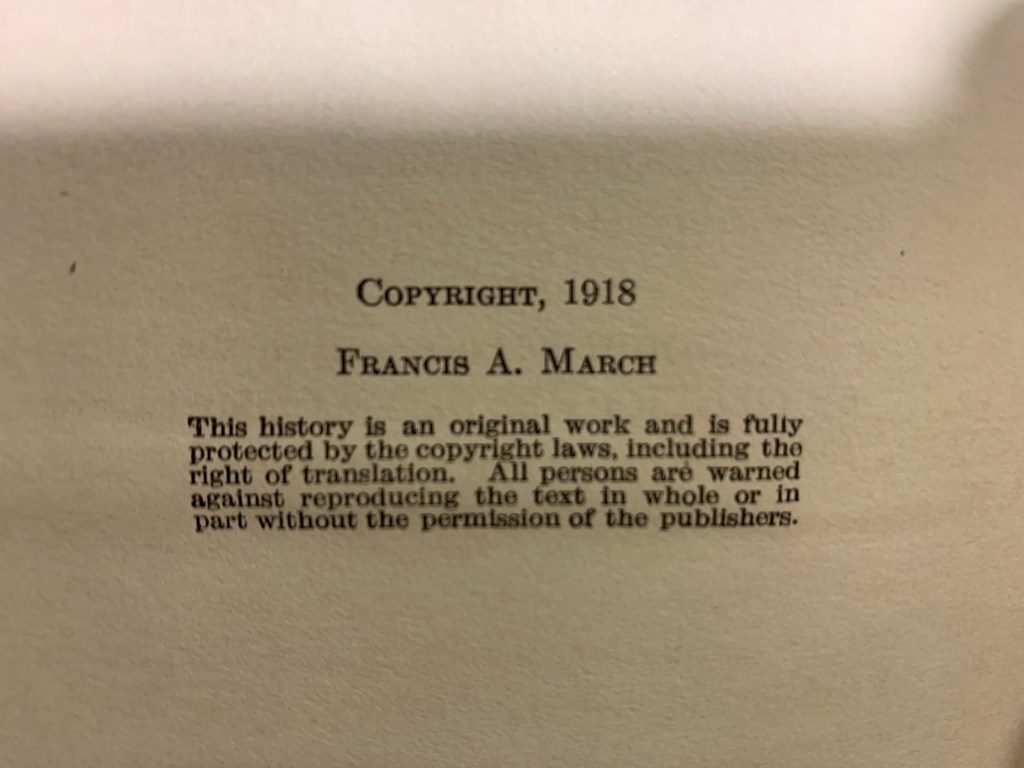
World War I was known as “The Great War”, or as in the case of this book, which was published in the same year as the war ended, 1918, “The World War”. There was no “World War II” yet, so nobody knew to call it “World War I”.
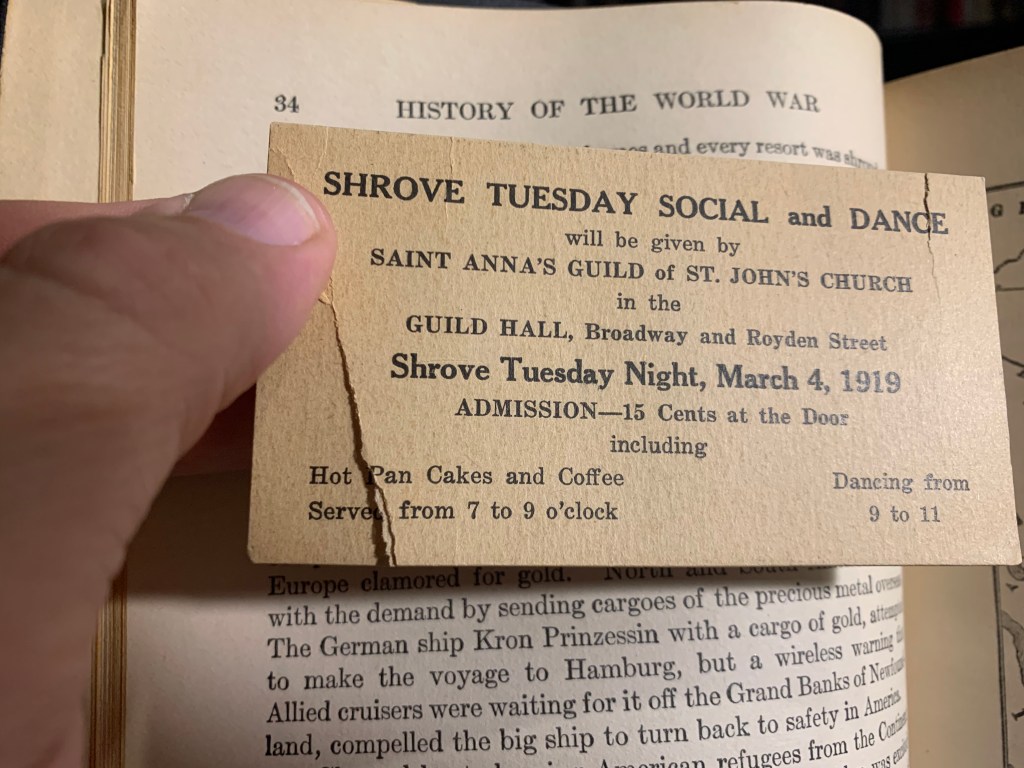
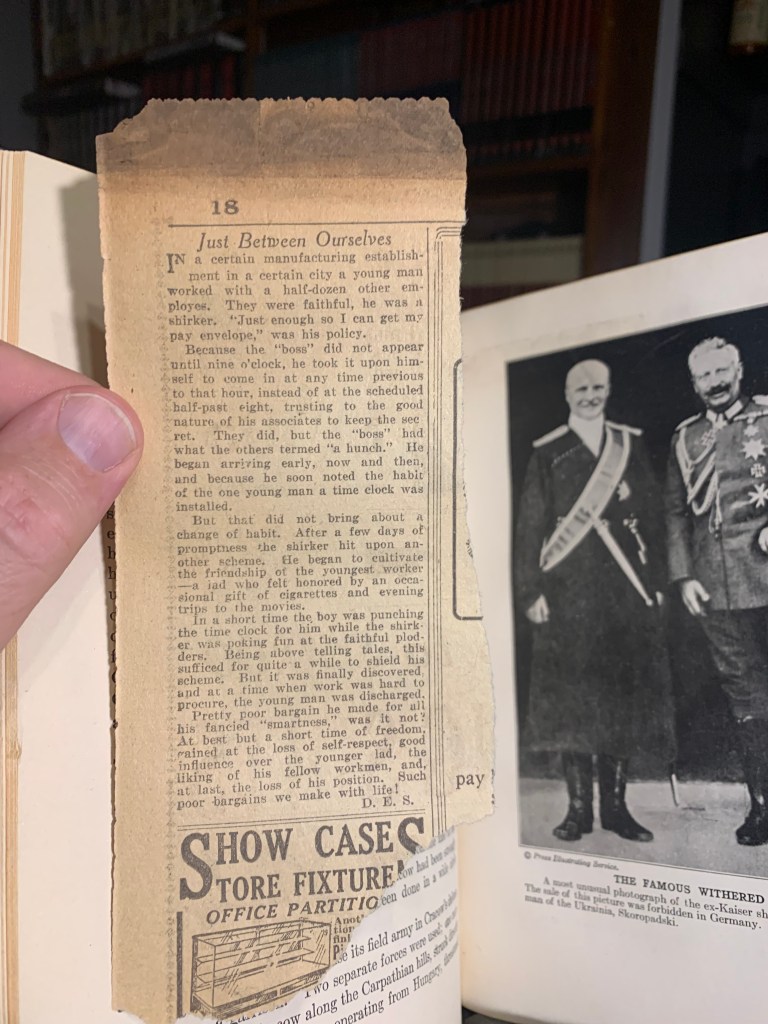
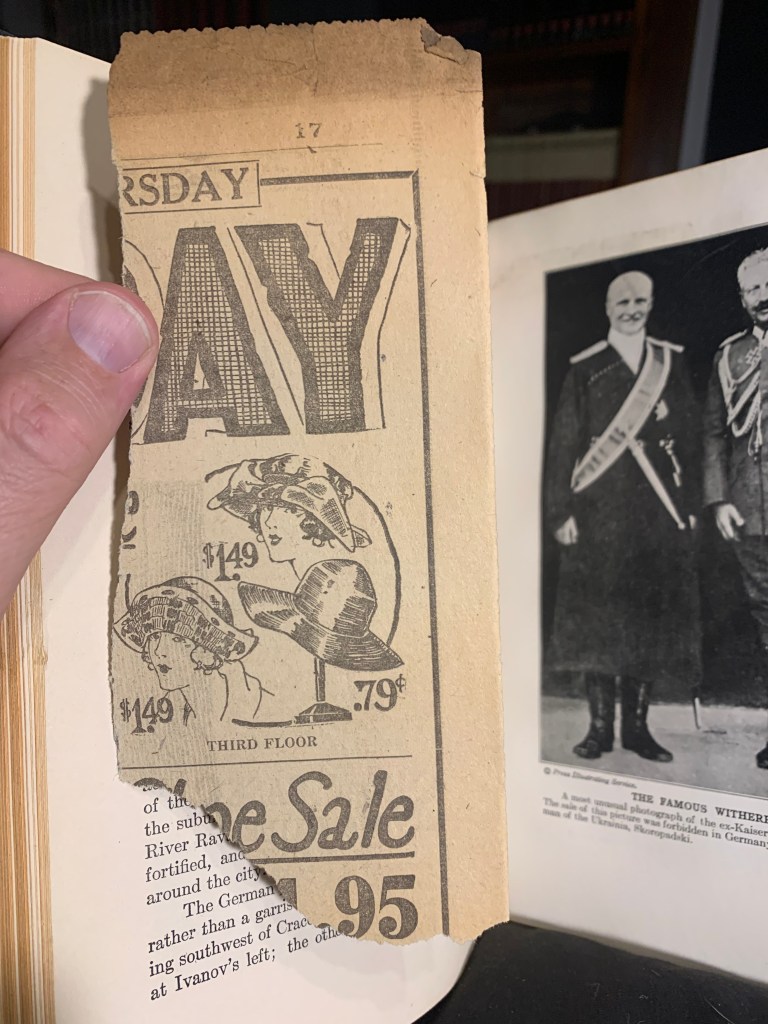
I found a piece of newspaper from what has to be a newspaper more than a hundred years old, and an invitation card from 1919, both used as bookmarks.
It is really neat to read books like this, written so soon after the war, and totally ignorant of the even worse war to come in just twenty years time from the publication of this one. There is a great amount of bias by the author, who was eventually a Brigadier General in the U.S. Army, but a lot of that comes from the perspective of the author and is very interesting to read. Francis A. March was active in that second war, so he saw a lot of violent history in his time.




 randyrydberg.org