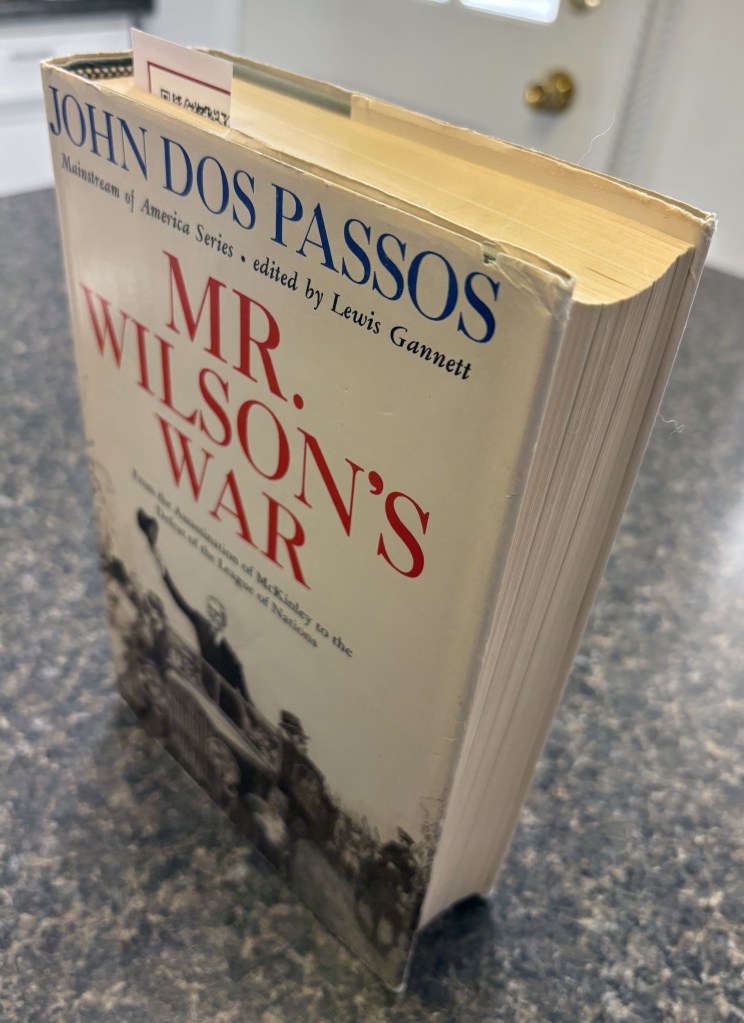
Today, I finished reading the 500-page book “Mr. Wilson’s War” by John Dos Passos. My primary historical interest is World War I, and one of my many gaps in knowledge about the war is how it ended, and also President Woodrow Wilson and the other presidents from his era. I’ve heard that he was a terrible president, and I’d like to find out for myself which means reading different books by different people, getting a wide view of the man and what he did, who he was, what he believed.
I’m still not sure if the United States should have been in this war; I’ve listened to lectures and various opinions, but like Vietnam, I haven’t rendered judgement on it yet. If you have an opinion on either one, I’d like to know what you think.
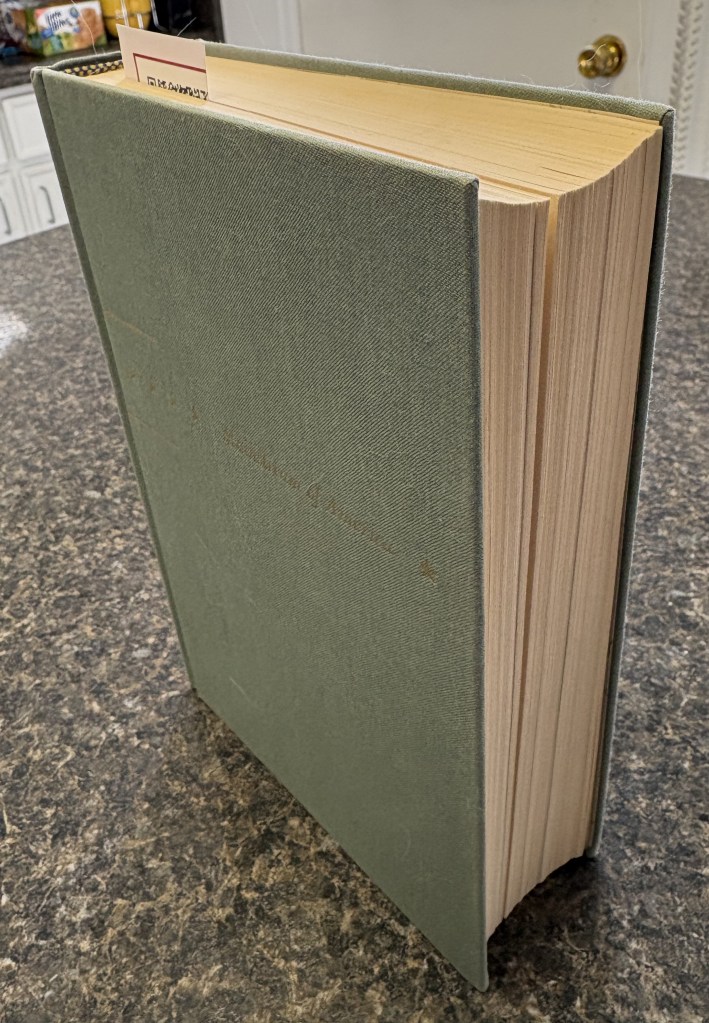
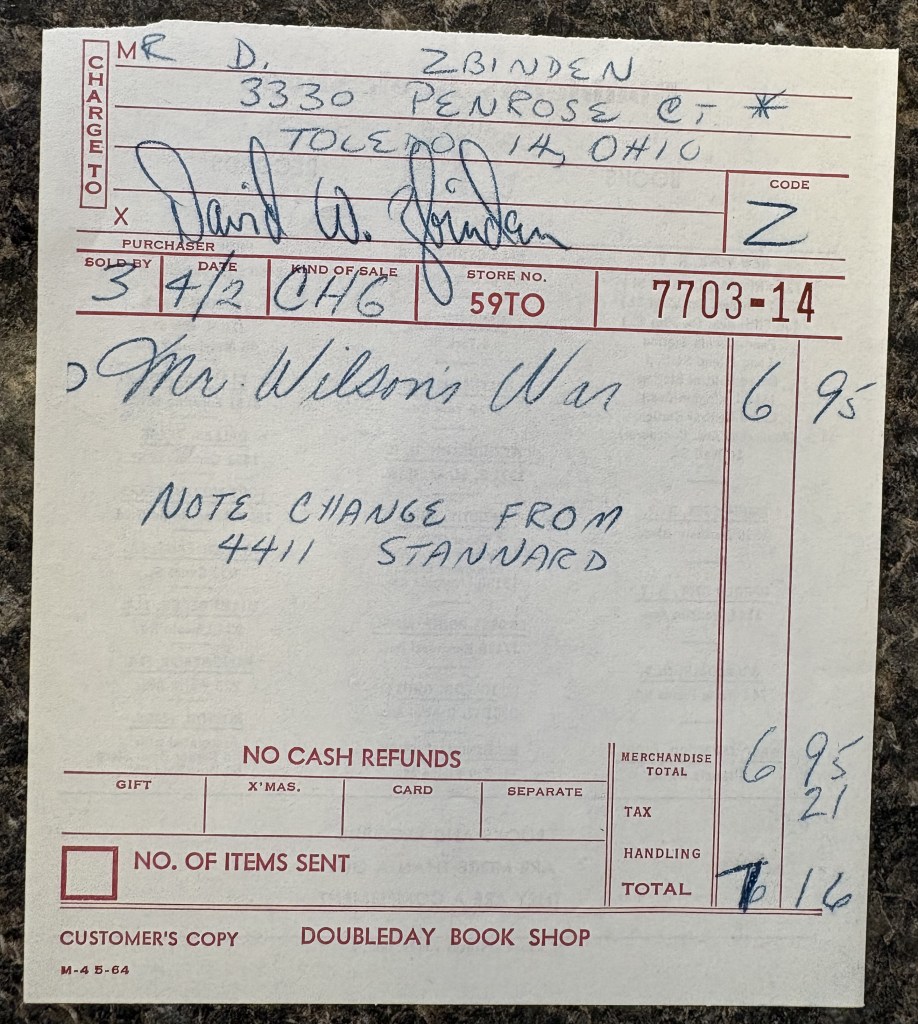
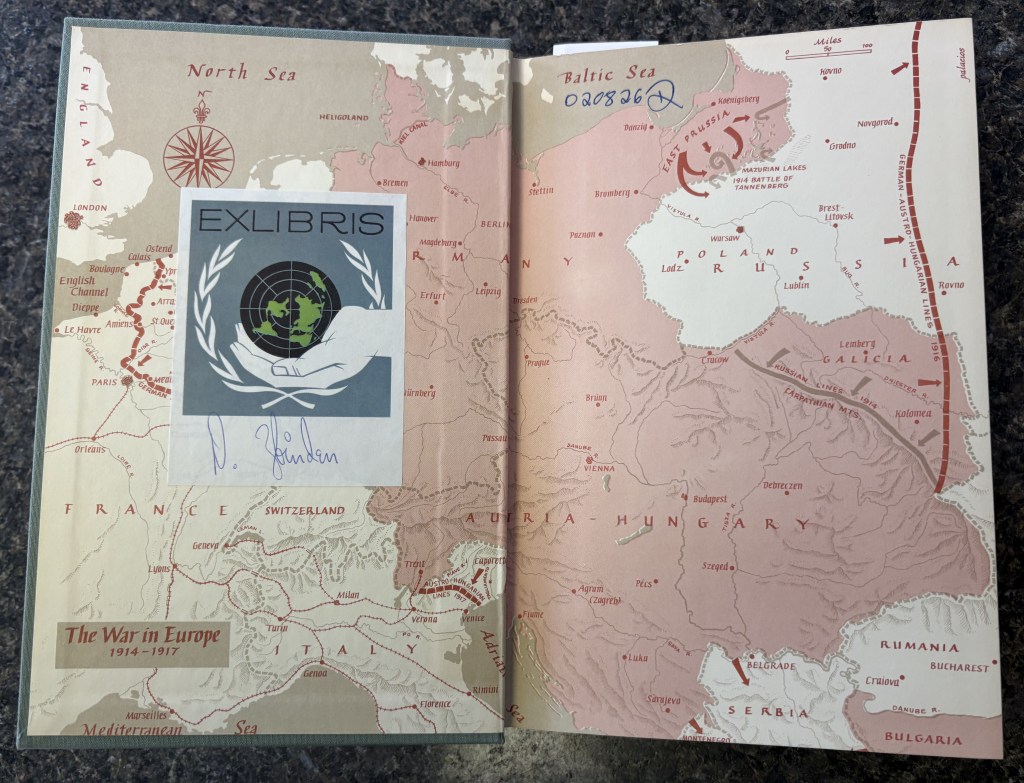
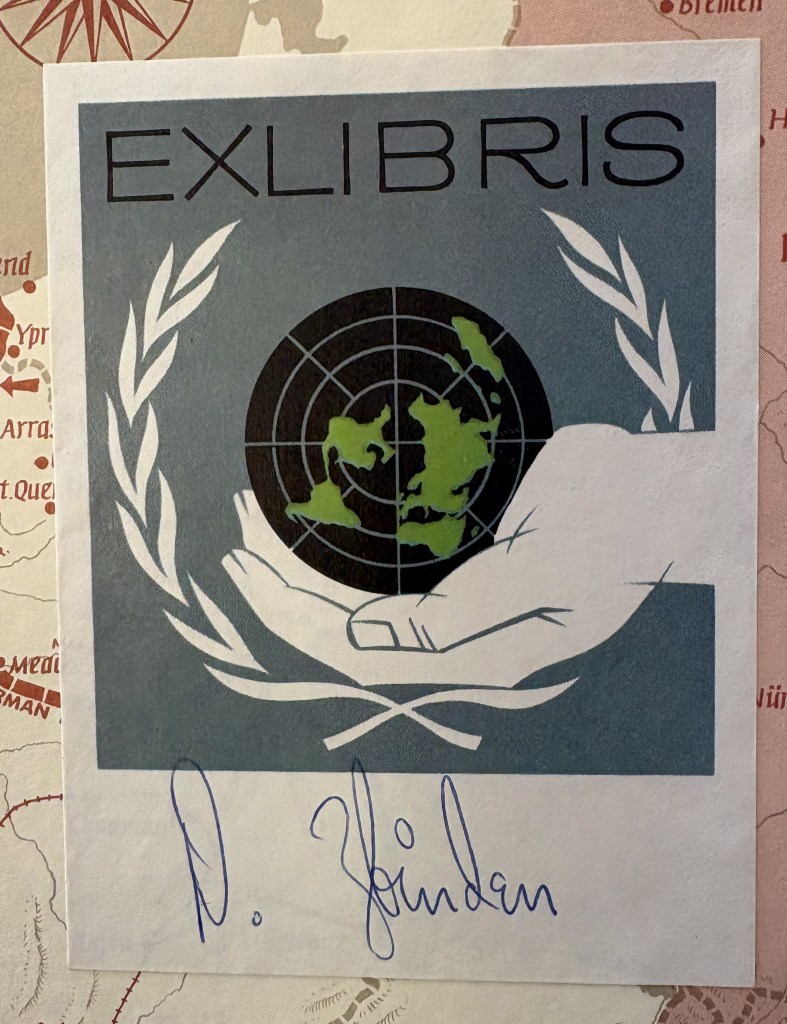
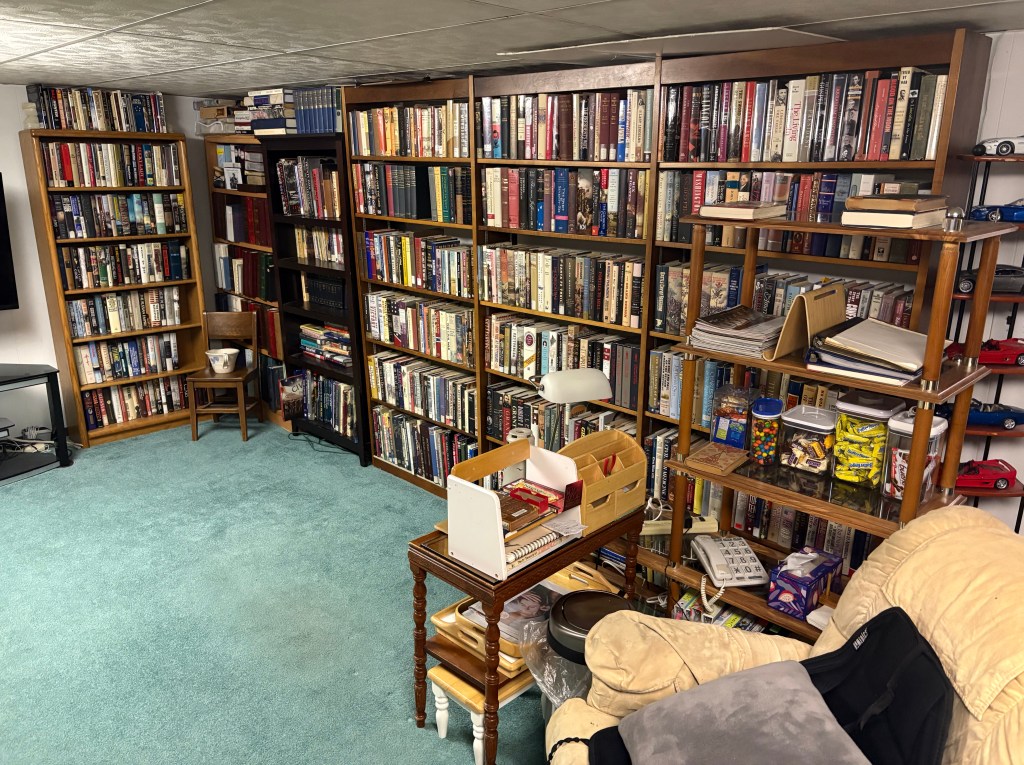
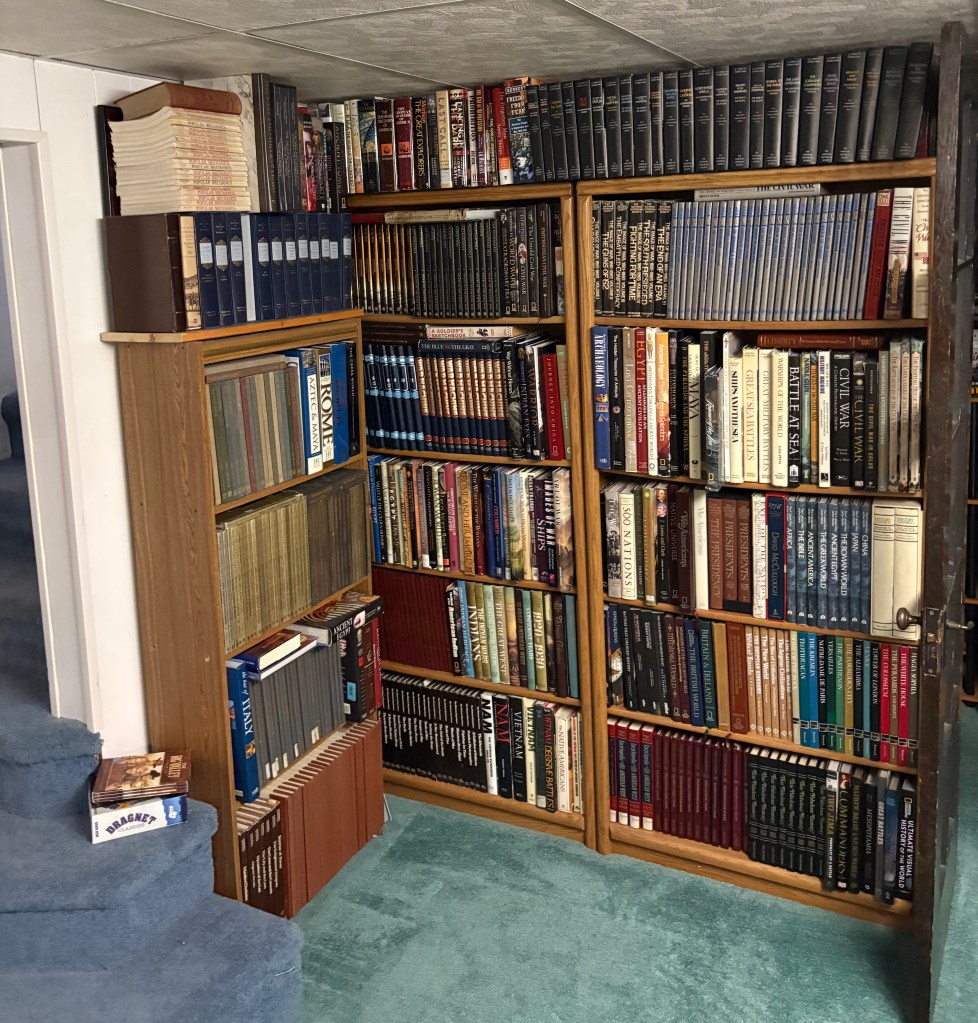
This volume was stolen from my Dad (by me) when I organized and catalogued the historical side of his library last month, in part because I wanted to read it, and also because he didn’t have a section for that kind of book; his library is more Old West and Civil War. The amazing thing is that the book is sixty years old, yet is in perfect shape aside from a little bit of aging in the paper. The original receipt was inside the book as well as a ‘library of’ marker from the original owner!
Most of the book is about Woodrow Wilson and his life, but it does leave him behind for a while and goes into the war like any regular book on The Great War, and then it ends with his determination to establish the League of Nations, the major intent of which was to provide a way to prevent wars through rules and procedures designed to avoid future conflicts.
Unfortunately, I believe that however well-intentioned that concept was, his methods would never have worked due to the negative basics of humanity. Just getting everybody to agree on the details of the Versailles Treaty to end the war was a mess, and the rules of the League of Nations charter were also difficult for everybody to agree on.
Also interesting is the way they brought the war to an end obviously led to World War II. Some of these decision-makers were not up to the task of thinking long-term, even if they believed that was exactly what they were doing.
(Page 479)
Harold Nicolson: First, one May morning at Lloyd George’s flat: “Lloyd George shows them what he suggests. They ask for Scala Nova as well. ‘Oh no, says Lloyd George ‘You can’t have that. It’s full of Greeks?’ He goes on to point out that there are further Greeks at Marki, and a whole wedge of them along the coast towards Alexandretta.
‘Oh no, I whisper to him, ‘there are not many Greeks there? But yes, he answers, “don’t you see it’s colored green?’ I then realize that he mistakes my map for an ethnological map, and thinks the green means Greeks instead of valleys, and the brown means Turks instead of mountains. Lloyd George takes this correction with great good humor.
“It is appalling,” Nicolson adds, “that these ignorant and irresponsible men should be cutting Asia Minor to bits as if they were dividing a cake. The happiness of millions being decided that way… Their decisions are immoral and impracticable… But I obey my orders.” (end of excerpt, Page 479)
I have other books on or related to this topic that I’m either going to read for the first time, finish reading, or read again.
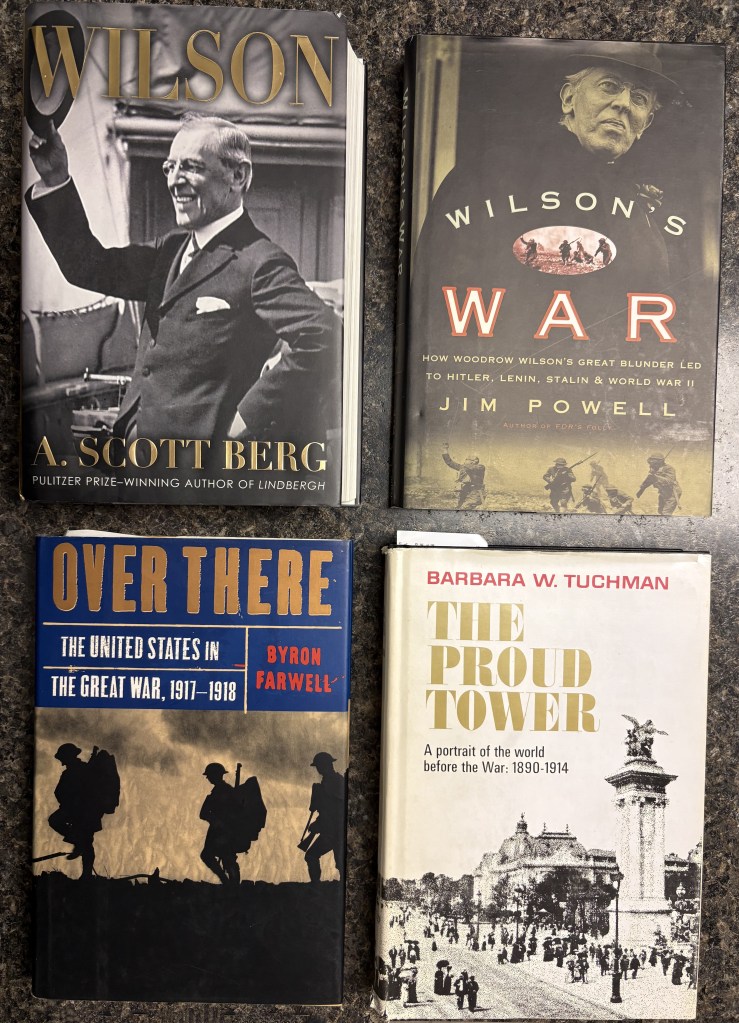
One of which is another book of a similar title: “Wilson’s War” by Jim Powell.
“Over There” is a book I read in 2007, but it is time to re-read it. It covers the Americans and our getting involved, the logistics, and of course the fighting.
“Wilson” is a water-damaged book from 2013 I picked up for a dollar. I like leather-bound books, library books, new hardbacks, worn hardbacks, paperbacks… they are all good. Using a damaged book like this feels good as just because it came across some bad luck doesn’t mean it doesn’t have any value! Other than the water damage, it is of decent quality, materials-wise, and was $45 new!
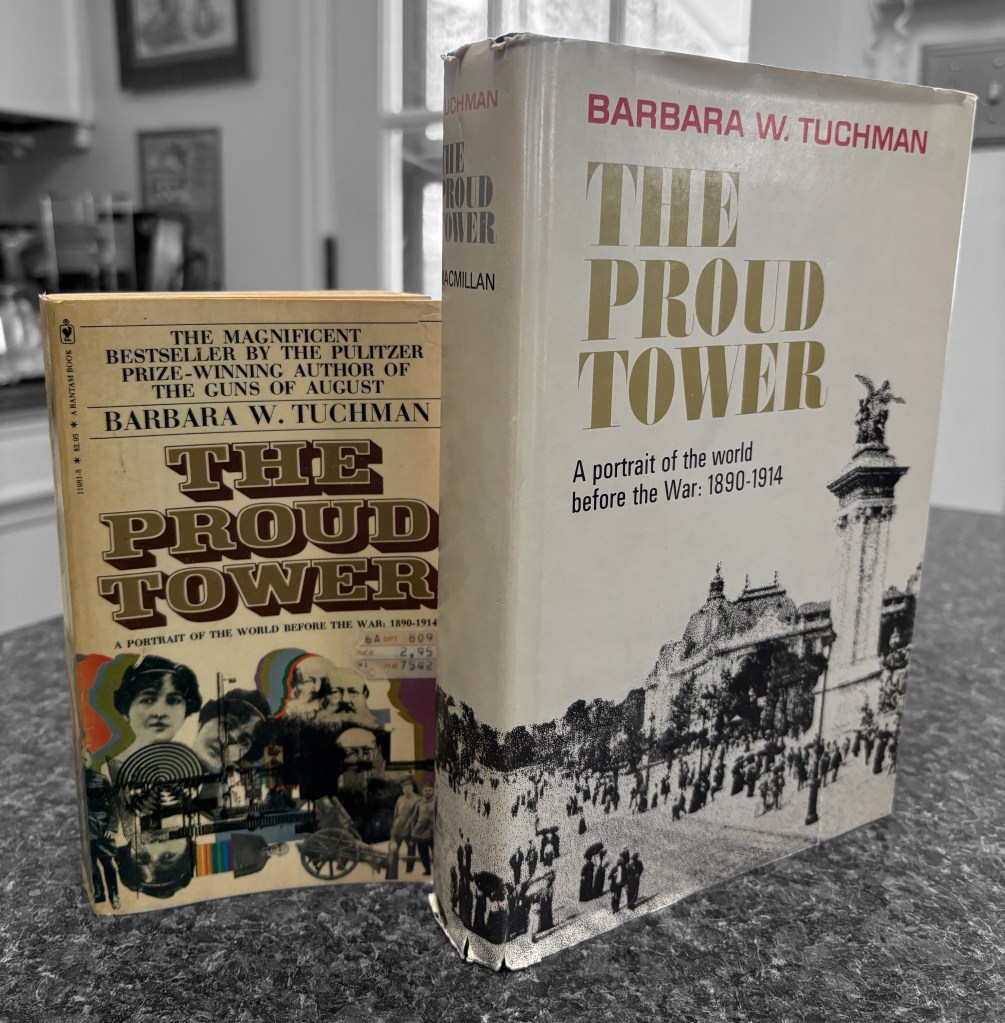
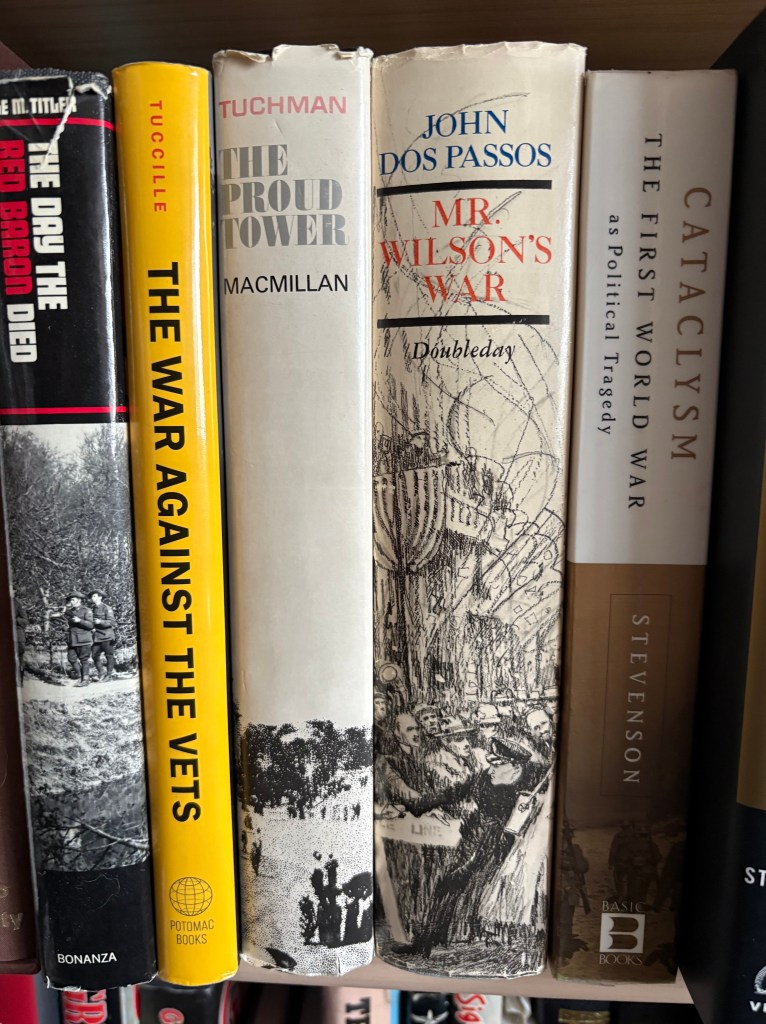
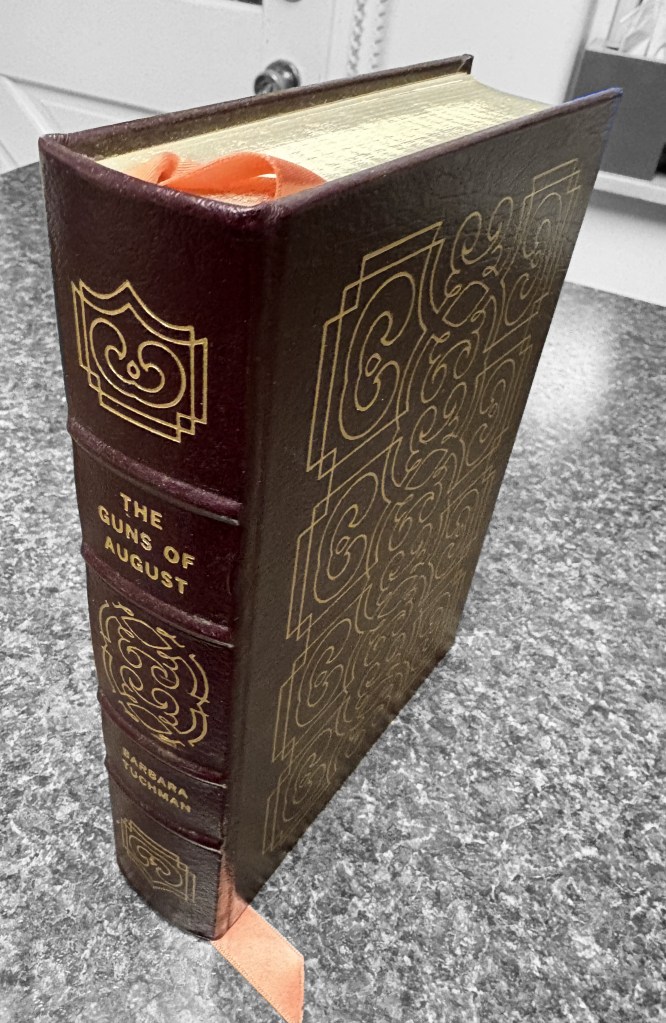
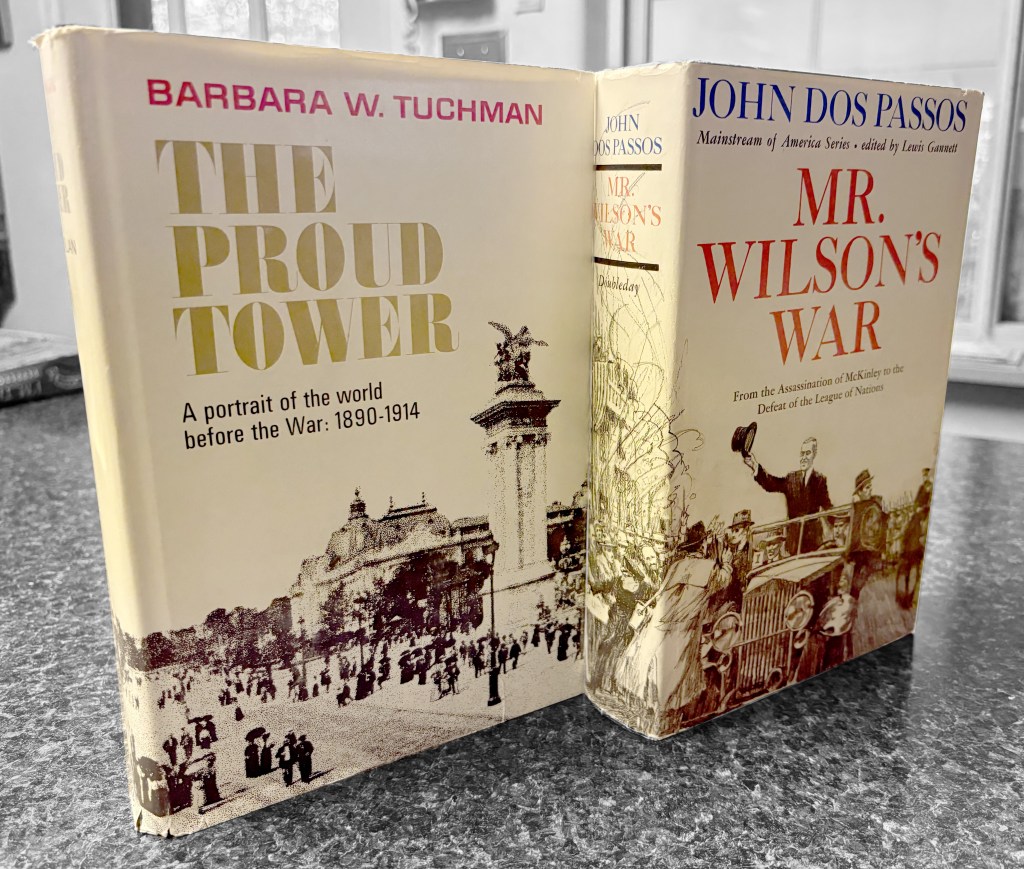
“The Proud Tower” is one I have been reading in paperback, even though I have three other books by the author in hardback. I had to “rescue” that paperback from the thrift store. Looking it up on Amazon, I decided that due to being unemployed, now is not the time to buy the hardback, and it was a good thing I passed on that because like the book I just finished reading, this turned out to be in my Dad’s library! (I stole this one, too). And it was previously purchased and owned by the same person as “Mr. Wilson’s War”.
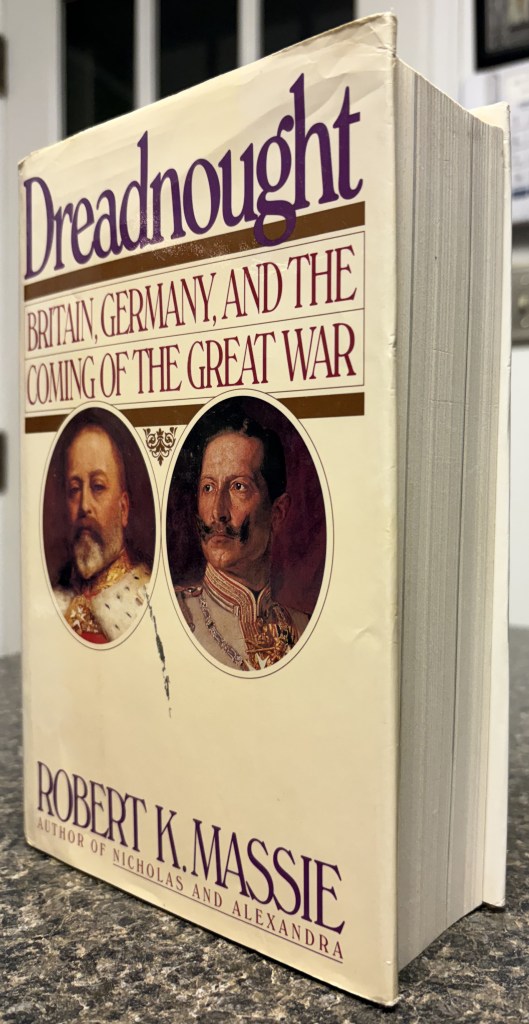
“Dreadnought” I bought this one for a dollar about ten or fifteen years ago at Thriftiques in Arvada… they had a big basement and a nice library-book section where every book was a dollar. This is a big one, and I got maybe a hundred pages in before I was distracted by a different book (that happens a lot. It is good to sample books like this, though, in order to better understand what one has in one’s library). It is a great copy, and what a deal! I don’t know why it is named after the class of ships, although they were a breakthrough design of the time, but I’ll figure that out when I finish reading it.
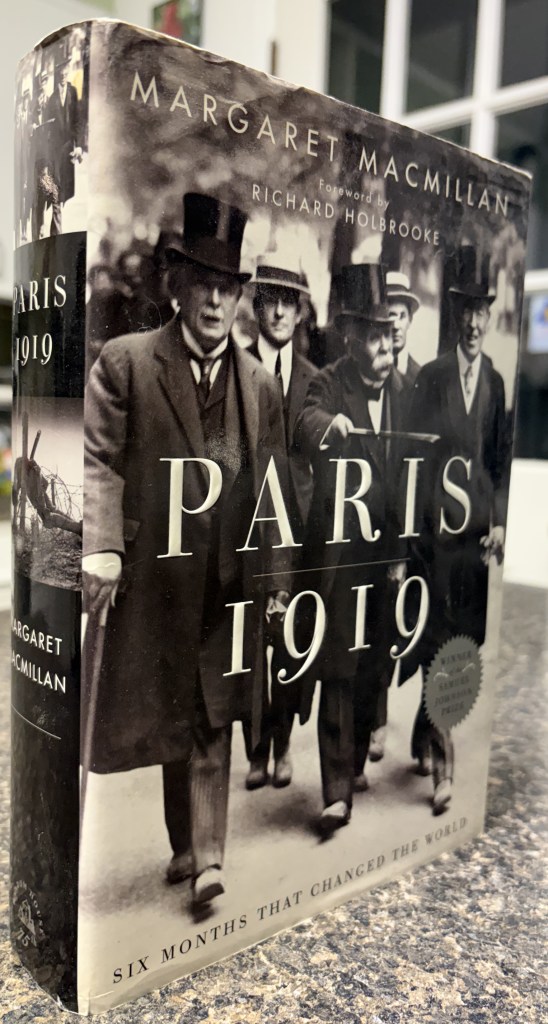
“Paris 1919” Here, I’ll find out more about the many hi-jinks involved in settling the details of the German surrender and the formation of the League of Nations. It is frustrating though, to hear about how these leaders lived and how they took their time with things, eating well and living opulent lives while innocent civilians in Germany were starving to death from the blockade. Not an uncommon thing in history.
I have more books that cover this topic, but these are the ones I have lined up in my brain to read next, among others. That’s the great thing about having a great library is the many directions and options one has. I’ve been “channel-surfing” with books for a while which is a great way to have a better understanding of what the collection consists of and to weed out any weaker books, which doesn’t happen much as I’m pretty selective when I buy them.
In any case, it feels great to finish a book like this, especially a book that has never been read in sixty years. A great book, forgotten in the depths of a library, rescued, read, and appreciated, and now among one of my important core volumes instead of just another unread book with potential.


 randyrydberg.org