Star Trek: The Original Series • Remastered Blu-ray Edition

I’m not an all-out Star Trek fan, but I did grow up on the original series, and have watched The Next Generation, Deep Space Nine, and Voyager several times over the years. Star Trek, the way I would do it, would be more adventurous and less goofy and super-natural, but the Star Trek we got was still (usually) very enjoyable. Over time, I like the Next Generation the least, Deep Space Nine more, and Voyager as a tragedy in what could have been. For instance, there was a Deep Space Nine episode where members of the crew were shrunk down to little size in a shuttlecraft, and they were flying around the station. Goofy, but fun. I’m more of a modern Battlestar Galactica (not the original), Empire Strikes Back, and Wrath of Kahn kind of guy, but at the same time I do like the original Time Machine, War of the Worlds, Forbidden Planet, original Planet of the Apes, Logan’s Run, Twilight Zone, and the Buck Rogers tv series with Erin Gray and Gil Gerard. I like the original Star Trek the way it is, but at the same time, I think all of the Trek series could have been better by not always getting super-natural and goofy so much. This was something that actually had to happen, because of the budget. The genius of the series is that the sets were part of a ship that went to different places, or had things happen on it. In any other series, the sets were more static in nature, and things all had to happen there, whereas the Enterprise travelled to new worlds, which meant they didn’t have to make as many new sets, it was mostly the Enterprise for many of, and sometimes entirety of the episodes.

Over the years, I always watch Trek and think of how things could have been so much better if they could have told more serialized stories, how there could have been more character growth, things like that. Ronald D. Moore, one of the writers of Deep Space Nine, did just that with that series, and then expanded on it with the remake of Battlestar Galactica, which is a case where the remake is far better than the original. I’m always watching and wondering things like, why didn’t they ever do a series with Sulu, or Riker getting his own command? Why aren’t there more secondary characters, why does it always have to be a set number, plus the guest cast? (Deep Space Nine had a crazy-good cast of recurring guest characters throughout it’s run, and it wouldn’t be wrong to say that the recurring cast could have taken the place of the original cast and made the show that much better.) This is one of the problems with Voyager, they had so many opportunities to do neat things, but they didn’t. It was all formulaic. And they had everything they needed, including an interesting cast of characters.

That said, I have a lot of issues with post-original series Trek, and I definitely am never going to watch any of the post-Enterprise (which I’ve only seen six episodes of, I hear it isn’t bad) series. More and more I have identified movies and series that in the past, I would have watched just because of the brand, the name, or the actors involved, but now I have many movies and series on my list that I’m never going to watch again, or never going to watch in the first place. I think it is better to re-watch something of quality, rather than watch something of no quality just to see something new. For instance, I’m never watching the Star Wars sequels ever again. That is an entirely different essay right there.

So, to sum up, I’m not a big Star Trek fan, although I have been in the distant past. I am definitely a fan of the original series and movies, with the exception of Star Trek V and VI. And I’m never going to watch Generations again, I don’t want to watch Kirk die in such an awful fashion, like Han Solo did in The Force Awakens. Nor did I watch more than one episode of Picard, with the way the emasculated the character, something that is a trend these days. Look what they did to Luke Skywalker in The Last Jedi, or Indiana Jones in the fifth movie that came out last year. There is no respect for who those characters are, what they became in their original adventures. These days, it’s all about being gloomy and breaking them down into emasculated shells of what they once were.

Anyway.

I just finished watching all of the original Star Trek series on Blu-ray, which has the option to watch with either the original special effects, or the new and improved effects. After the hit-or-miss improvements to the original Star Wars trilogy, it is understandable for someone to be pessimistic about these changes. I found these changes to be very respectful to the original material, and in every instance, the improved effects actually make things better. The guy in charge of this said that he tried to keep things as they would have been done, had the original effects team had today’s technologies available to them. From little things like clocks and readouts looking perfectly natural, instead of like old car odometers, to phaser blasts being cleaned up, starships and planets looking more realistic… all of the changes look great, and some are expanded a bit because originally, they didn’t have the time or budget to actually show what they were talking about. It looks great, and helps it match the different series that followed it.

That’s not to say that the original special effects were bad; they are just horribly dated, and they don’t have to be. Nothing here is anywhere near as bad as say, George Lucas adding a giant creature waking in front of the camera for a good five seconds, or making Jabba’s band all goofy. What is done here actually improves things, quite a bit.

If one watched this show back in the day, it was every week, with the summer off. So there are a lot of things one wouldn’t really notice, that one does notice on a binge-watch like this. Things like: Blasters and communicators don’t work more than they do work, always because of some all-powerful alien force. I didn’t tally this, but I wouldn’t be surprised if it was actually every other episode that this happens. Or, the Enterprise is being controlled, threatened, or damaged by all-powerful alien threats. Or, the transporters. Things just don’t work that often. This is in a way, conflict, something that Gene Roddenberry didn’t want the crew of The Next Generation to have. They were always supposed to work together without any conflict, which again and again, people involved in writing for The Next Generation always complained about because without conflict, it is horribly difficult to write anything of interest in a drama. By the time Deep Space Nine game about, they did away with that non-workable Roddenberry law.

I didn’t notice that many red-shirts dying, a trope that is pretty popular with this series. It does happen, but there are plenty of blue-shirts and tan-shirts that get taken out as well.

The third season was notorious for being of lower quality, thanks to severely cut budgets, and Gene Roddenberry moving on to do other things. I didn’t find it to be that bad, but there is a difference, for sure. A lot of my tolerance for this has to do with growing up with the series, and some of the episodes were just nostalgic, and just no that bad. But there were fewer quality stories, for sure. They kept using the same, albeit redressed, planetary set over and over, with the same cave entrance over and over, and only one on-location episode.

It was interesting to see Diana Muldaur, the Next Generation’s season two doctor, in two different roles on two different episodes, as well as some of the regular background extras that were in the series from beginning to end. It was also sad to notice how Grace Lee Whitney, who was supposed to be a long-term series regular, was just gone after about ten episodes in. There were episodes that she was clearly supposed to be in, where they substituted someone else. I also never noticed how little Sulu and Uhura were used, and I don’t remember seeing Nurse Chapel so much. I think that the movies that followed blurred out how little they were used in the original series. I also didn’t realize that Chekhov wasn’t in the first season, and that he, Shura, and Sulu were often not in any of the episodes.

I kept a list of my favorites, and the ones that were horribly awful or boring, and there were only about eight or ten episodes that were that bad. All of the others were fine, in my opinion.

My Favorites:

Tomorrow is Yesterday • The Enterprise is sent back in time to Earth in the 1960s, where the US Air Force detects it, and an F-104 pilot brought aboard the Enterprise.. The crew must correct the damage to the timeline and find a way to travel back to the future.

Space Seed •  The Enterprise crew encounter a sleeper ship holding genetically engineered superpeople from Earth’s past. Their leader, Khan Noonien Singh (Ricardo Montalbán), attempts to take control of Enterprise. The episode also guest stars Madlyn Rhue as Lt. Marla McGivers, who becomes romantically involved with Khan.

A Taste of Armageddon • Two societies that have a sterilized way of conducting war.

This Side of Paradise • The Enterprise visits a planet where the inhabitants are under the influence of strange plant life flowers that shoot spores which provide protection from deadly Berthed Rays.

Operation – Annihilate! • The flying flat creatures that attach to people’s backs and kill them.

Miri • Only survivors are kids who, when they reach a certain age, they go nuts and die.

The Devil in the Dark • The Enterprise is called to investigate deaths at a planetary mining facility. Spock and Kirk go on an away mission to the facility, leading to them facing off against a deadly subterranean creature.

Mirror, Mirror • The episode involves a transporter malfunction that swaps Captain Kirk and his companions with their evil counterparts from a parallel universe (later dubbed the “Mirror Universe”) in which the Enterprise is a ship of the Terran Empire, a conquering and murdering organization where officers are assassinated as punishment and as a means of promotion.

The Apple • A paradise that turns out to be deadly, and run by the snake-mouth computer god. The natives live only to serve a machine.

The Trouble with Tribbles / DS9 Trials and Tribble-ations • The Blu-ray set includes the Deep Space Nine episode (which is one of the best Trek episodes ever) where they go back in time, and integrate into the original episode. It is brilliant in concept, story, and execution.

Balance of Terror • The first appearance of The Romulans, by way of battle.

Shore Leave • An empty planet gives a much heartier shore leave than anticipated.

By Any Other Name • The majority of the crew are turned into cubes so that the humanoid aliens can use the Enterprise to go back to their own galaxy.

The Omega Glory • Kirk Spock, and McCoy are infected on a planet with warring tribes ruled by a rogue Starfleet captain.

Patterns of Force • A planet has adopted Nazi ideology and the Enterprise crew attempts to find out why.

Day of the Dove • An alien menace forces the Enterprise crew and the Klingons fight each other.

Wink of an Eye • Beings that live faster than can be seen take over the Enterprise.

Elaan of Troyius • Kirk must teach a petulant woman ruler some manners while fending off sabotage and Klingons.

The Cloud Minders • A society in the clouds abuses the land-dwellers, leading to a problematic transaction of life-saving minerals.

BAD EPISODES:

The Alternative Factor • the crew of the USS Enterprise encounters a “reality jumping” madman. It is the first Star Trek episode to deal with a parallel universe. The constant cut-scenes to the inter-dimensional fighting between two characters was so boring and on, every time they did it. Over and over, and over again.

The Galileo Seven • First Officer Spock leads a scientific team from the Enterprise aboard the shuttlecraft Galileo on an ill-fated mission, facing tough decisions when the shuttle crashes on a planet populated by aggressive giants. This episode made me temporarily dislike Spock.

Assignment: Earth • Engaged in “historical research”, the USS Enterprise travels back through time to 1968 Earth, where they encounter an interstellar agent planning to intervene in 20th-century events. Kirk and Spock are uncertain of his motives. This was supposed to be a back-door pilot, and maybe it would have been a good show, but as a Star Trek episode, it didn’t do it for me.

The Paradise Syndrome • An alien device on a primitive planet erases Captain Kirk’s memory, and he begins a new life with the planet’s indigenous people modeled on Native Americans. This is the only on-site episode of season three, and the monolith they built is a pretty impressive set. This could have been a good movie, but to me it was just a boring episode.

Is There in Truth No Beauty? • The Enterprise travels with an alien ambassador whose appearance induces madness. Diana Muldaur in her second, although a different character, Original Series appearance. They grabbed her when the original actress became unavailable. This was one of those entirely Enterprise-set episodes with few special effects, because they didn’t have enough money. I just found this one boring.

The Empath • While visiting a doomed planet, the landing party is subjected to brutal experiments by powerful aliens. Minimalistic sets, due to third season budget constraints. Another one I found boring.

The Lights of Zetar • Strange incorporeal aliens threaten the Memory Alpha station and the Enterprise.

The Way To Eden • Space hippies. The Enterprise is hijacked by a hippie-like group obsessed with finding a mythical paradise. I didn’t like this episode when I was a kid, either.

Deluxe Editions

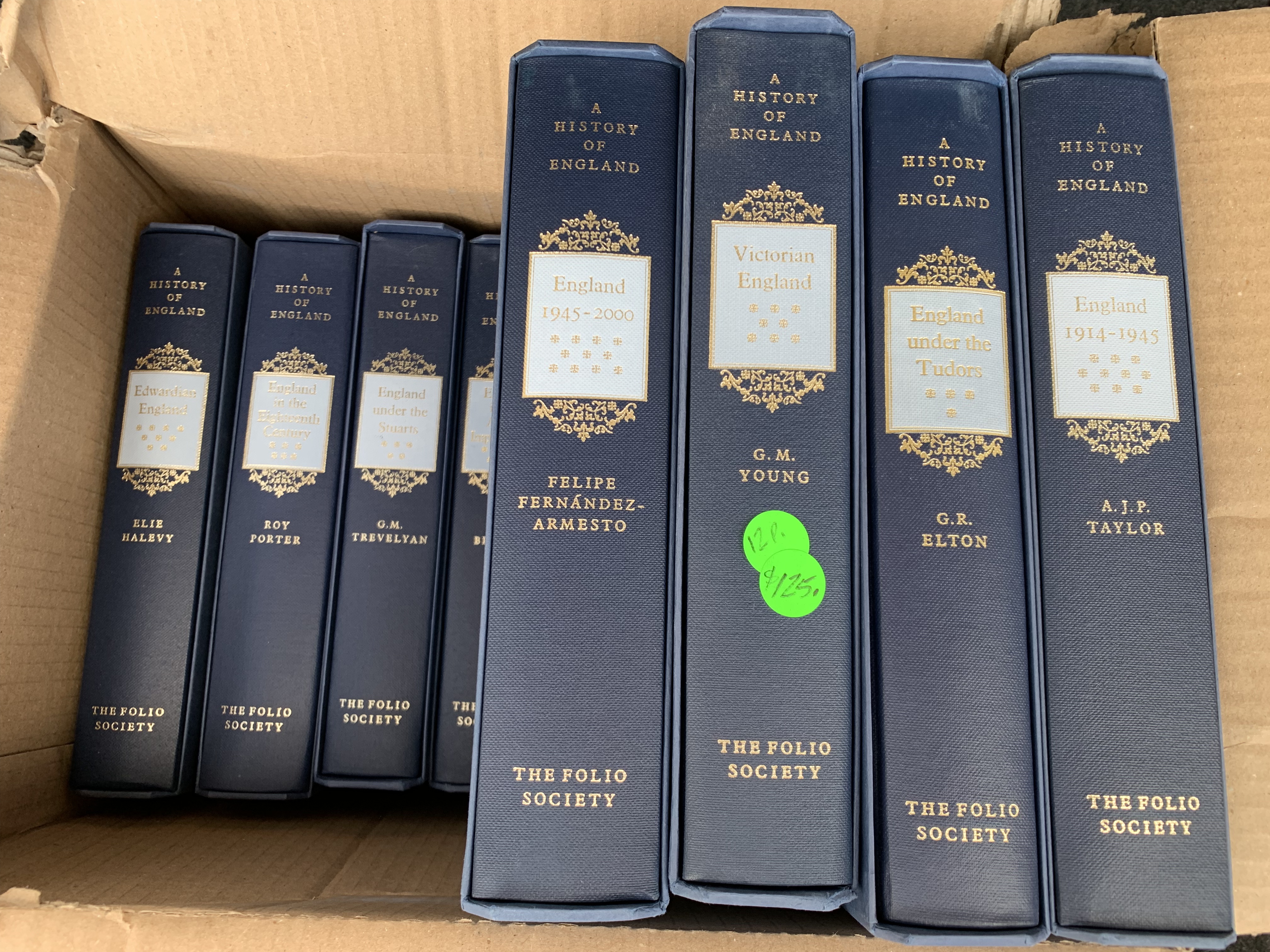
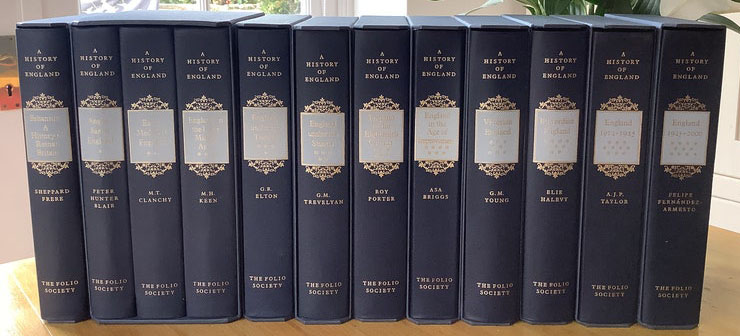
I now have a section for leather-bound gilded-page deluxe volumes, most of which are the Barnes & Noble Collectable Editions. That is such a great thing, where they take a wide range of well-known books and re-publish them in a very deluxe manner.

The “War and Peace” and “Day of the Triffids” are Easton Press volumes, they are of even better quality, at a much higher price. I paid about forty bucks for Triffids used, as it is my favorite fiction book, and ten bucks for “War and Peace” at the thrift store. Someone must have passed away as there was a lot of these Easton books there. I refrained from buying any more than this as I haven’t much room, so I need to stick to things I actually plan to read. Although I wouldn’t mind having a big bookshelf of these high-end books.

Easton Press publishes the Horatio Hornblower series in its entirety, but at $600. That’s just over a hundred dollars per book. While I’d like to own those, that is probably never going to happen, which is a shame be cause nobody else seems to have reprinted those, leaving old, dated copies the only kind one can find, before the paperbacks.

The Classic Star Trek are the James Blish versions of the original series episodes, and I remember reading them back in the 1980s. When he wrote them a decade before that, there were no VHS tapes, only broadcast re-runs, so his versions of the show were the only way to enjoy them on one’s own schedule. I remember them as a very good read. This volume here collects about twelve or so paperbacks into one volume, that has been out of print for a while so I had to really hunt down an affordable copy that was in good shape.

I kept looking for the Barnes & Noble Ray Bradbury collection over the years, sure I’d seen such a thing at some point, but it was never in the stores. Turns out it has been out-of-print for years, so I found this well-read library copy and got the stickers to come off, leaving it in pretty good condition considering.

I’m a third of the way through The Count of Monte Cristo, which is one of my favorite movies (the early 2000s version gets better every time I watch it.) English was spoken and written much differently back then, but one gets used to it.

The “Jurassic Park” has both of the novels, a great way to go.

“H.G. Wells: Seven Novels” is simply something that should be standard in everybody’s library.

The “Han Solo Trilogy” isn’t the Han Solo Trilogy by Brian Daley that I’ve read many times since elementary school, I really wish they’d put together a volume of that. But this trilogy is by a renowned author of the genre, and is considered to be a worthy continuation of those stories, even referencing them at some point. So, hey. I have no plans on buying the Collector’s Editions of Boba Fett or Obi-Wan as I’m not that committed to Star Wars books.

The book on the U.S. Constitution and other writings is just a good thing to have around and look at once in a while. It should be standard reading in schools, but that would probably be too much to ask.

The John Wyndham omnibus isn’t a deluxe volume, but I paid as if it was. It was printed in 1980 and there aren’t many available. Triffids is my favorite that I’ve read many times, but some of his other works I have tried, but haven’t been able to get far in. The same thing happened to me with Jose Farmer’s “Riverworld” series, except all of his other books that I tried were awful. “Riverworld”, outstanding. Everything else? (I tried maybe three books, so that isn’t extensive) Not so much. But I wanted to have this Wyndham collection so I could give his other works another go without taking up too much extra space on my shelves.

I don’t have a big list of Barnes & Noble Collectors Editions that I’m looking to buy, I’m trying to be really selective. It would be a different thing if they reprinted a lot more different titles than they currently do. I’d really like to buy Easton Press’ “Band of Brothers”, which is $100, and maybe the Collectors Edition of “Dune”, which I’ve never read, but is supposed to be outstanding. I’m not in a big hurry to read it. I’m still getting over a deluxe copy of “Foundation” by Isaac Asimov, which is heralded as one of the best science fiction books ever… I got a hundred pages in, and it was SO BORING.

I used to have a very large selection of science fiction books, but most of them that I read, or tried to read, really weren’t that great, or even, they were awful. Despite great reviews and nice cover art. One really can’t judge a book by its cover! So, along with all of my political books (all depressing), I had a Stalinistic Great Purge about ten or fifteen years ago, to make room for more history books. I was still going to the annual library sales back then, hauling back boxes of books, so this bought me a lot of shelf space.

Now my science fiction section has twenty books, tops, if that. And two or three political books. I need more space again, but there is nothing to purge, as my shelves are full of great stuff!

The Things Our Fathers Saw

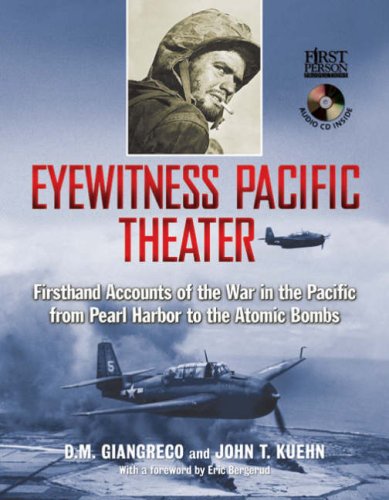
I bought these last week, they are actually eight books condensed into three, at about a thousand pages each. They are conversations and first-hand accounts of the Second World War, and the guy who put these together is a history teacher, who self-published them. I saved a lot of money by getting these omnibus volumes as opposed to the regular books. There is a ninth volume I don’t have, but I’m going to wait for that one to be combined with the forthcoming tenth and maybe eleventh book.

I have a difficult time understanding how people who aren’t interested in this kind of thing, can’t just give them a read, putting themselves in the positions of the people telling their stories, especially as all of this is real and not fiction. It is interesting no matter who the reader is, if the reader comes at it from an apathetic view, as in putting one’s self in their place.

Even more so, there is a lot of interesting and valuable things to learn by listening to what they have to say. We’re so distracted with trivial things that we miss the value and importance of knowing about things like this.

Day of the Triffids

My favorite fiction book of all time is Day of the Triffids by John Wyndham. I was introduced to the book through borrowed cassette tapes from the library of the 1960’s radio adaptation, which was very good. I listened to it all the time for years. Eventually I found a paperback copy, and then another, and eventually a nice hardback version (SF Masterworks) that is really hard to find now, if at all. Although the cover and the build of this book was really good, the text was obviously copied cheaply, but it was still just fine to read.

About fifteen years ago, I was able to get the really expensive leather-bound Easton Press version of eBay used, for $44. I like these kind of books, especially the lower-priced but still very nice Barnes & Noble Collectable Edition books.

This week, I found an omnibus of Windham’s work, a total of six books-in-one, but there were only a few of them available, as it was printed in 1980. My copy was shipped from Great Britain, but I’m glad to now have it! I tried reading one or two of his other books, but they never really had the same impact. I’m going to give it another try though (I paid enough for this one, I’d better!)

I have a remastered version of the radio play, but none of the movies or the miniseries, all of which aren’t in wide circulation. The 1950’s movie has the Triffids as big as trees, which is ridiculous, but as an old-school sci-fi movie it is okay. The 1980’s miniseries is far better, but I only have a weak VHS home recording from thirty years ago that I had bought online. There is a newer movie from the 2000s that I haven’t seen yet, but I think they “updated” a lot in it, so I’m not sure if it is as true to the book as it should be.

In any case, the book brings up a lot of interesting questions about society, and is a lot like the Walking Dead, but with better antagonists in the Triffids. And, almost everybody in the world has gone blind. Triffids are man-eating plants that can actually walk around. Before the night of strange, bright lights in the sky (that made everyone who saw them blind as of the next morning), they were domesticated and harvested for their oil. Considered very harmless, until they, due to the now blind human population, became better at sensing their place in the world and could do as they wished. Through sound and vibrations, they could find someone, slash them with their poisonous whip-like stinger, and wait by the body…

And they had this unique sound, a soft sort of sound that in the radio play, became quite terrifying.

There was a book that came out maybe twenty years ago called Night of the Triffids, by a different author, but it turned out to be very good, he even wrote in the same style of John Wyndham.

I’d recommend the radio play, if one was to listen without disturbance. Preferably in the dark. But if you want to try out a great read, this would be it!