It seems these days, that most people don’t have the concept of a library; they just see someone who has “too many books”. I have been asked on more than one occasion: “You’re never going to be able to read that many books!” While it would be nice to have the ability to read all of my books, (I actually know a guy who can do this, but alas, I am a slow reader) one of the many benefits of having an actual library is the ability to wander and select something I hadn’t thought about in a long time. I’m a custodian of this custom library, full of volumes that people have put an immense amount of work into creating. It definitely isn’t just a “collection” of books.
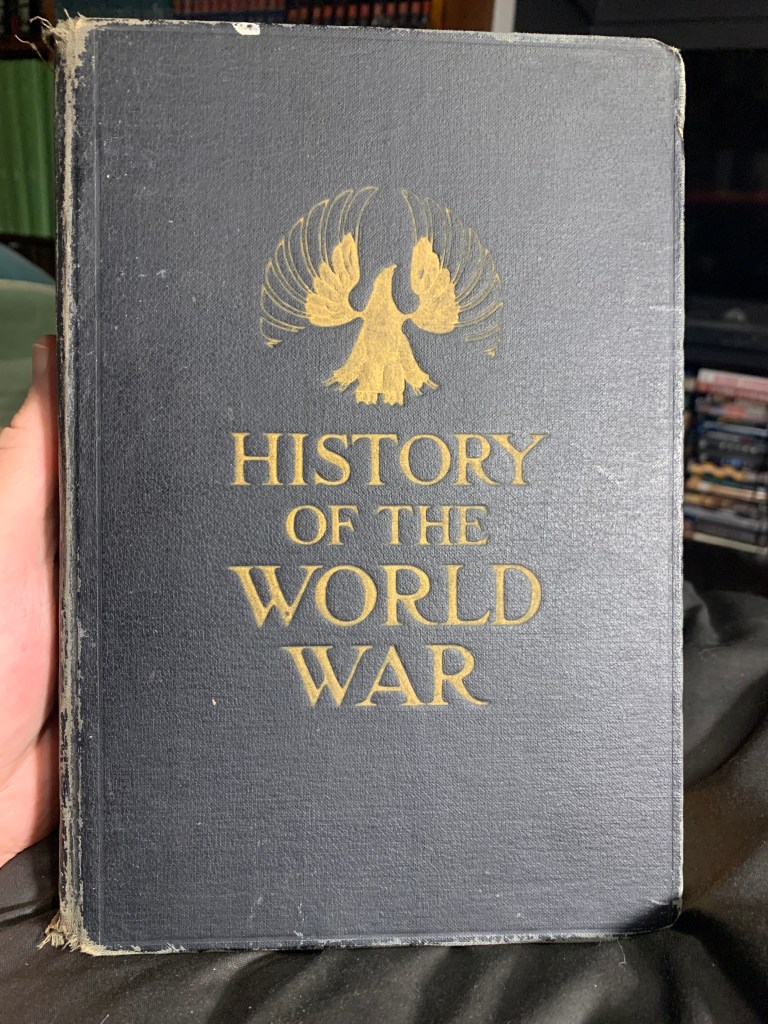
A few weeks ago, I found two small, old volumes at the thrift store, and they were part of a set of five. Upon checking “The Registry”, also known as my spreadsheet, it turned out that I had the compilation of all five, a complete and singular volume in my library already. I had a tough time finding it though, because all of my World War I books are supposed to be in the same place, but I had to search and discover this was mistakenly among my older World War II books. But, it couldn’t hide, as The Registry doesn’t lie, it had to be here somewhere!
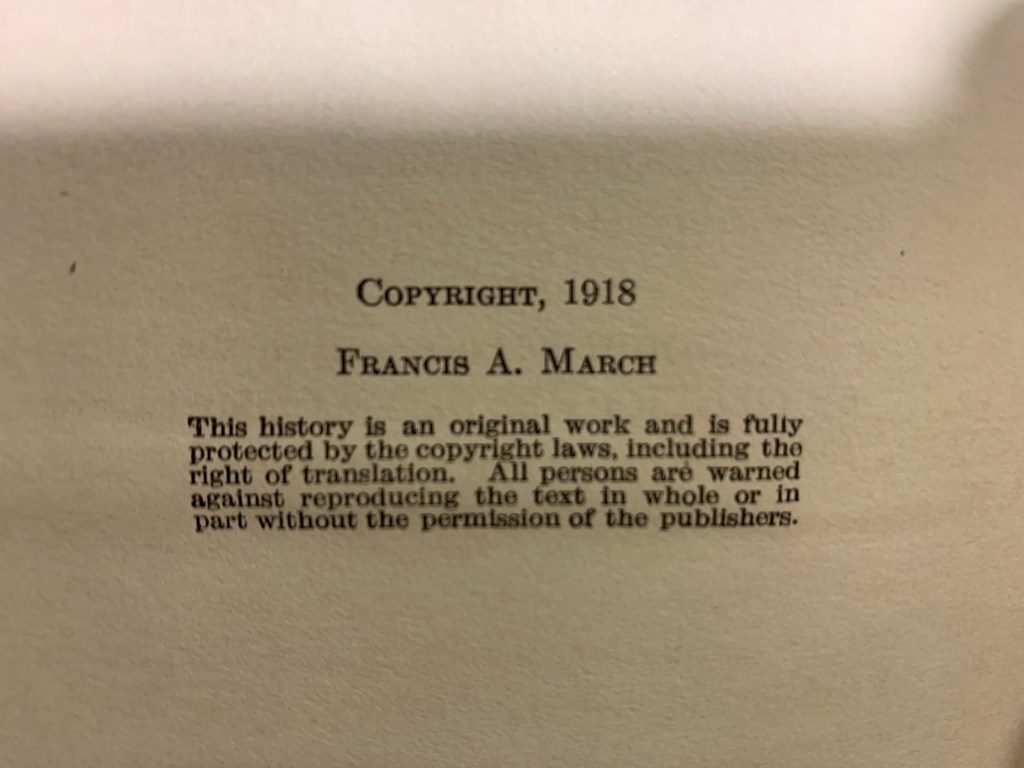
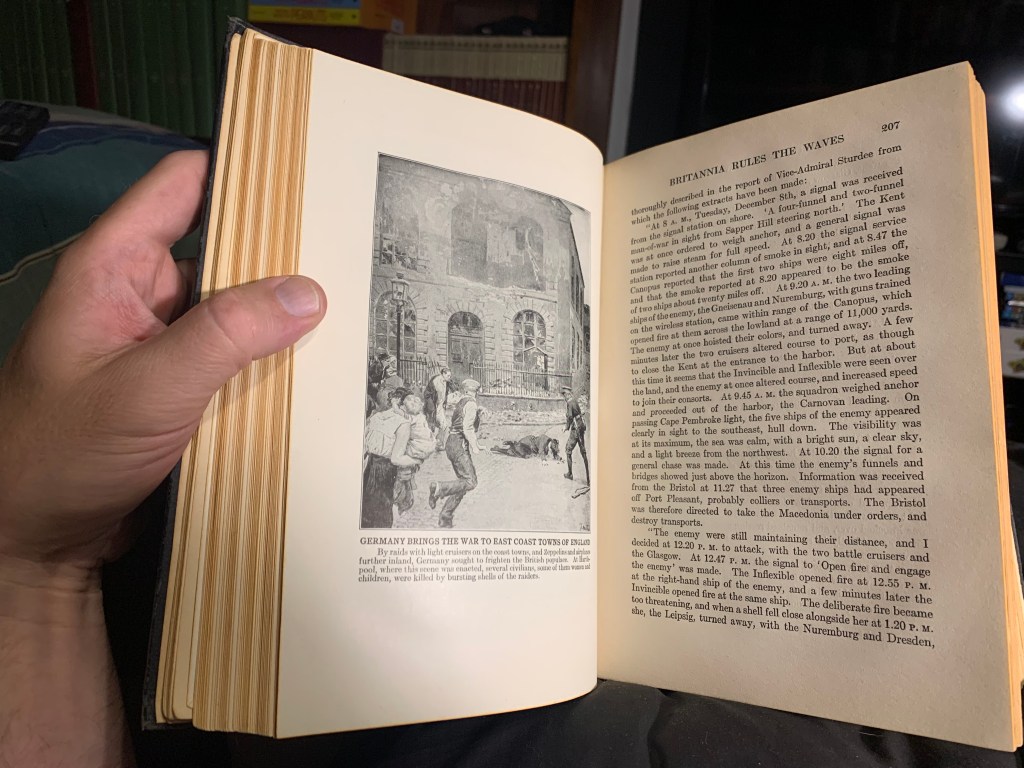
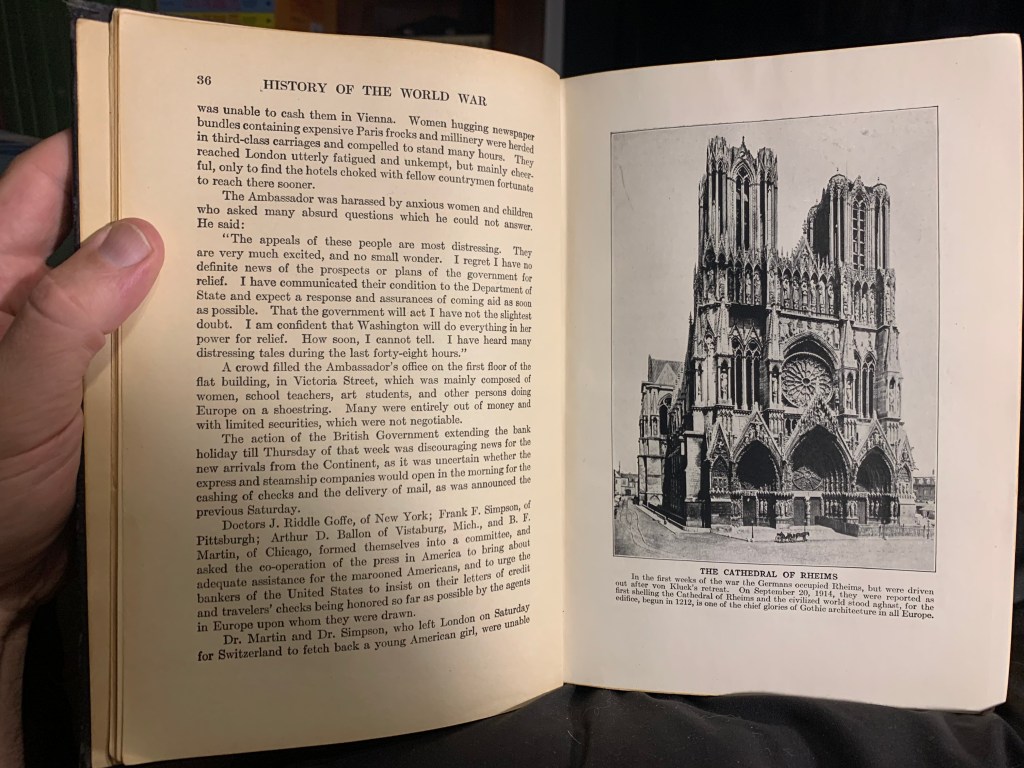
World War I was known as “The Great War”, or as in the case of this book, which was published in the same year as the war ended, 1918, “The World War”. There was no “World War II” yet, so nobody knew to call it “World War I”.
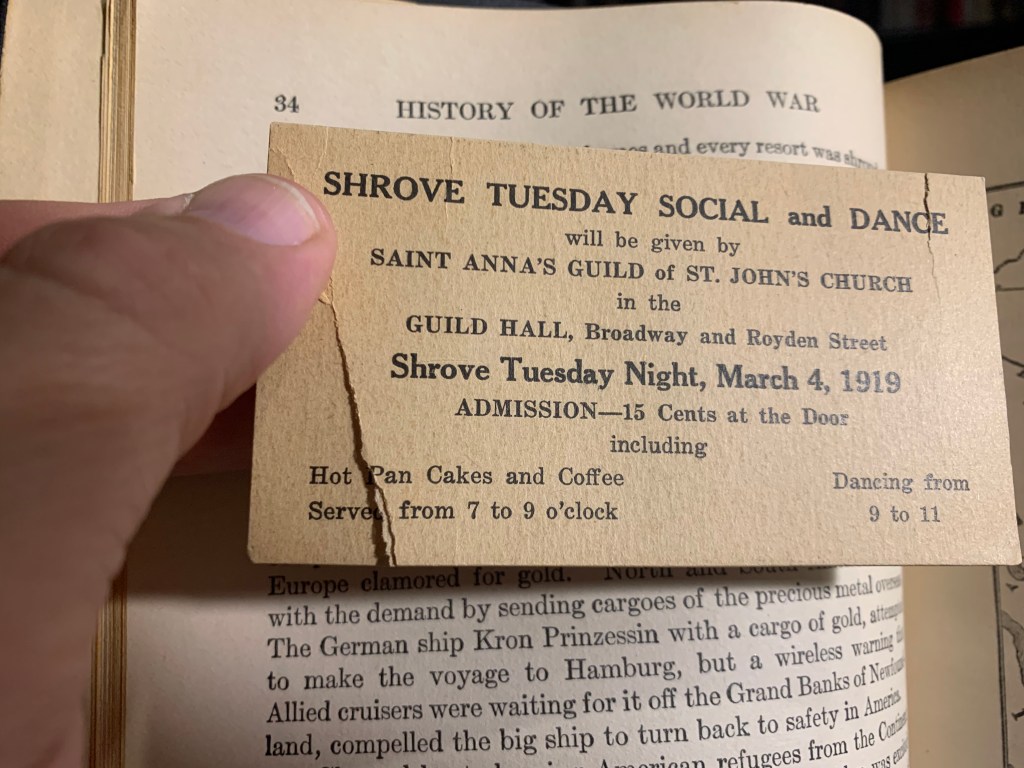
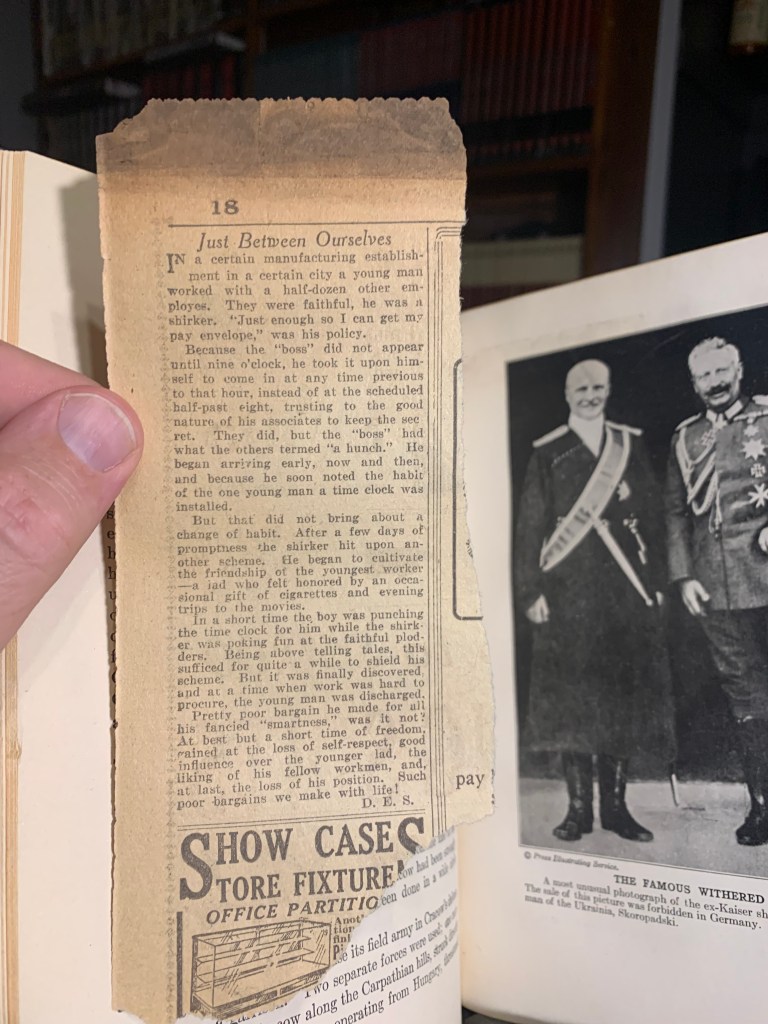
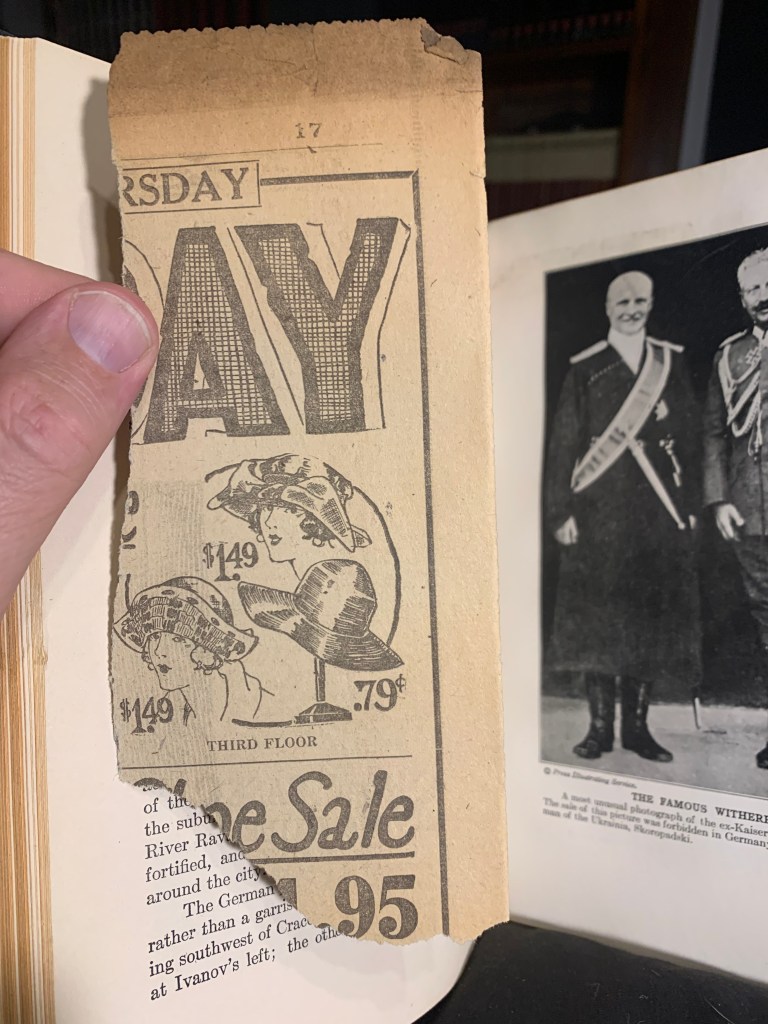
I found a piece of newspaper from what has to be a newspaper more than a hundred years old, and an invitation card from 1919, both used as bookmarks.
It is really neat to read books like this, written so soon after the war, and totally ignorant of the even worse war to come in just twenty years time from the publication of this one. There is a great amount of bias by the author, who was eventually a Brigadier General in the U.S. Army, but a lot of that comes from the perspective of the author and is very interesting to read. Francis A. March was active in that second war, so he saw a lot of violent history in his time.


 randyrydberg.org